
Most parents don’t wake up thinking, today I’m going to yell at my kids.
And yet, by 8 a.m. somewhere between spilled cereal, missing shoes, and a toddler tantrum you’re yelling again.
You feel guilty. You tell yourself you’ll do better tomorrow. But the next day plays out the same.
Sound familiar?
You’re not alone and you’re not a bad parent. You’re a human being with a nervous system on overload and probably very few tools to regulate it. Most of us were never taught how to stay calm. We were raised in homes where yelling was normal or where big emotions were discouraged or dismissed.
So when you ask yourself how to stop yelling at my kids, you’re really asking:
“How do I break the cycle I was raised in while raising emotionally secure, confident kids of my own?”
Yelling doesn’t come from logic—it comes from survival.
When we feel disrespected, ignored, overwhelmed, or out of control, the brain perceives those moments as threats. In response, we fight (yell), flee (shut down), or freeze. Yelling is not a conscious decision. It’s a default response formed through years of emotional wiring.
Many of us were raised in environments where:
Today, when your child talks back, refuses to listen, or melts down, you’re not just reacting to them. You’re reacting to deeply embedded emotional blueprints from your own upbringing.
In The MamaZen Parenting Method, I share how my biggest trigger was sibling conflict. When my kids fought, it stirred unresolved memories from my childhood. I wasn’t just yelling at my children, I was unconsciously reliving the chaos I once experienced.
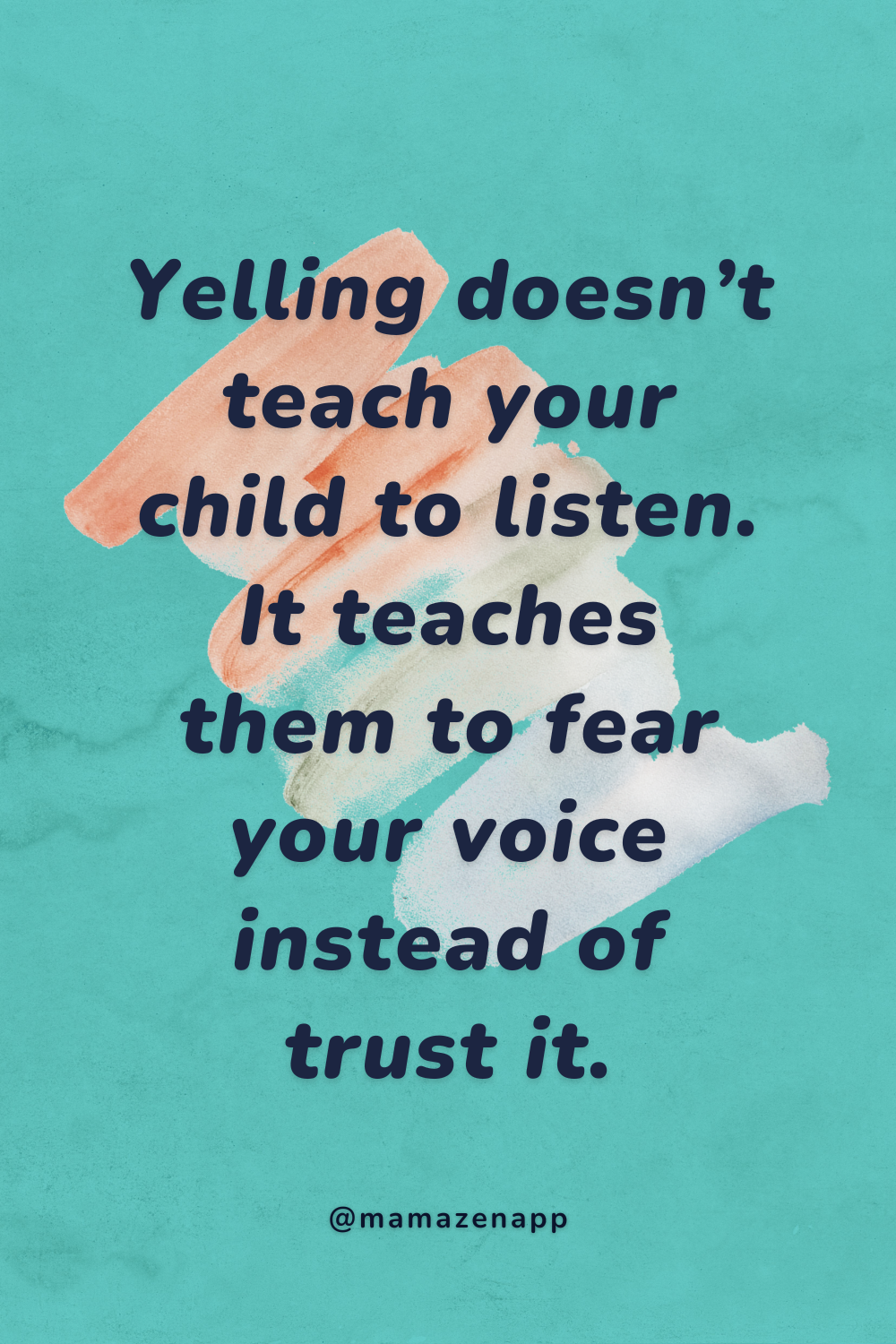
While yelling may temporarily stop a child’s behavior, it has lasting neurological and emotional effects.
When a parent yells:
This neurological shutdown means your child is not internalizing the lesson. Instead, they are internalizing fear, disconnection, or shame.
Repeated exposure to yelling can lead to:
Learning how to not yell at your kids is not just about reducing noise—it's about safeguarding their development and emotional health.
Yelling often becomes habitual because of how the brain builds pathways through repetition.
Each time you respond to stress by yelling, that reaction is reinforced. Over time, the brain chooses that route automatically, especially in moments of fatigue or overwhelm. This is how yelling becomes a default—even when we know it’s not helping.
To break the habit, we must replace it—not just resist it. That’s where mental and emotional training comes in.
Remaining calm in the face of chaos is not just a parenting strategy—it is an emotional education.
When you regulate yourself instead of yelling, your child learns:
These experiences build inner security, emotional resilience, and long-term confidence. Children raised in emotionally safe environments grow into adults who can trust themselves and navigate stress without breaking down or lashing out.
If yelling is the result of stress, conditioning, and emotional overload, the solution has to address those layers—not just the surface behavior.
You don’t need more parenting tips. You need mental tools that support you in the moment, help you retrain your reactions, and build emotional strength over time.
Here are seven strategies grounded in neuroscience and psychology that will help you stop yelling at your kids and start parenting from a place of calm and clarity.
Most yelling isn’t about the present moment—it’s about accumulated stress or unresolved emotional history.
Instead of reacting to your child’s behavior, ask:
This process helps you shift from reactivity to awareness, which is essential for long-term change.
MamaZen’s Regulate First: The 2-Minute Downshift session guides parents through this exact process—allowing you to respond with intention instead of instinct.
When the body is in fight-or-flight mode, calm thinking becomes nearly impossible.
Parents often try to “stay calm” through willpower, but unless the nervous system is regulated, that effort is likely to fail. Techniques like grounding, breathwork, and visualization help shift your system out of reactivity and back into balance.
This is the foundation of MamaZen’s Mindpower Sessions. Each session supports nervous system regulation, making calm responses accessible—even during stressful moments.
Just like physical fitness, emotional regulation requires daily practice.
Most yelling habits cannot be changed overnight, but they can be rewired with consistent mental rehearsal. MamaZen’s 4-Min. De-Stress and quick Daily Mindpower Minutes are designed to be used daily, helping you reset your baseline from reactive to resilient.
You will yell sometimes. What matters most is how you reconnect afterward.
Repair teaches your child that:
A simple repair might sound like: “I yelled earlier, and that wasn’t okay. I’m sorry. I’m working on handling my feelings better, and I want us to feel safe together.”
This builds trust and models emotional growth—both of which enhance your child’s confidence.
Anticipate the moments that consistently lead to yelling—mornings, homework, bedtime—and create a “calm plan” in advance.
For example:
The MamaZen app includes full guided sessions for common high-stress situations like bedtime resistance, defiance, and emotional outbursts.
We often interpret difficult behavior as disrespect when it’s actually a sign of emotional dysregulation.
Children are not trying to give you a hard time—they’re having a hard time. Their brains are still developing, and they need your support more than your correction.
When you shift your perspective from “They’re testing me” to “They’re struggling,” you open the door to connection instead of conflict.
The desire to stop yelling is not about becoming perfect. It’s about becoming more aware, intentional, and supported.
Speak to yourself with the same kindness you wish to extend to your children. Recognize that your struggles make sense—and that healing is possible.
The MamaZen app was built to support this process with zero judgment, offering real tools for real moments.
When you feel the urge to yell, try one of the following in-the-moment alternatives:
1. Lower your voice instead of raising it
Whispering disrupts the pattern and invites attention rather than resistance.
2. Ground yourself physically
Place your hand on your chest, grip a surface, or press your feet firmly into the floor to calm your body.
3. Use a reset phrase
Saying “Pause. I’m going to try that again” gives both you and your child a moment to recalibrate.
4. Step away briefly
If safe to do so, remove yourself for 30 seconds. Regulate yourself before returning to the situation.
Each of these techniques teaches your brain a new response, creating space between trigger and reaction.
Learning how to stop yelling at your kids is not about being perfect, it’s about making the decision to change, and then practicing that decision every day.
You are not behind. You are not broken. You are in the process of healing, growing, and becoming the kind of parent you always wanted to be—and that your child needs most.
If you're ready to build that kind of emotional foundation, you're not alone. MamaZen is here to support you with practical tools, expert guidance, and real transformation.
Irin Rubin is the CEO and co-founder of MamaZen and the author of The MamaZen Method. Inspired by her own experience with pregnancy and postpartum anxiety, she has spent years developing mindfulness and cognitive hypnotherapy programs that support emotional well-being during pregnancy, birth, postpartum, and parenting.


Science-based Mindpower Sessions® help you create lasting change for you and your family.

Get instant relief right when you need it with our 5-7 Minute Emergency Sessions.

Empowering Kids to conquer anxiety, build confidence, and foster positive self-talk.

Supporting and guiding you through every step of parenthood.
Get expert tips to raise confident kids.
Enter email for access!