
You open your eyes.
Before you've even gotten out of bed, your mind is already racing.
Did I sleep on the wrong side?
What if something is wrong with the baby?
How am I going to get through everything today?
Maybe your heart feels like it's beating faster than usual. Perhaps your stomach already feels uneasy, or you wake up with an overwhelming sense of dread that seems to come from nowhere.
If this sounds familiar, you're not alone.
Many expecting moms notice that anxiety feels strongest first thing in the morning. Even if you felt relatively calm the night before, waking up can bring a sudden wave of worry that makes it difficult to start the day.
The good news is that you're not imagining it, and you're certainly not the only one experiencing it. Understanding why morning anxiety can happen during pregnancy may help you approach those early hours with more confidence and self-compassion.
If your anxiety seems to fade later in the day, you may even wonder whether you imagined it.
But anxiety often fluctuates. Some expecting moms find mornings are the hardest, while others struggle more in the evening. These changing patterns don't mean your feelings aren't real—they're simply one way anxiety can show up during pregnancy.
Understanding these patterns can help you respond with more self-compassion instead of wondering whether you're "overreacting."
Many pregnant women report that their anxiety changes throughout the day.
Some feel more anxious at night when the house is quiet and there are fewer distractions. Others find that mornings are the hardest part of the day, with worries appearing almost immediately after they wake up.
Pregnancy brings enormous physical, emotional, and lifestyle changes. It's natural for those changes to affect how you feel from one day to the next, and even from one hour to the next.
Feeling anxious in the morning doesn't necessarily mean something is wrong with your pregnancy. However, if anxiety is becoming frequent, overwhelming, or interfering with your daily life, it's worth discussing it with your healthcare provider so you can receive appropriate support.
There usually isn't one single reason.
Instead, several physical and emotional factors can come together, making anxiety feel more noticeable shortly after waking.
One reason mornings can feel different is that your body follows a natural daily rhythm.
As part of this rhythm, levels of a hormone called cortisol naturally rise before you wake up. Cortisol plays an important role in helping your body become alert and ready for the day.
Cortisol is often called the body's "wake-up hormone" because it helps you transition from sleep to alertness. This daily rise is completely normal and happens whether you're pregnant or not. However, if you're already feeling stressed or anxious, this natural increase in alertness may make those anxious sensations feel more noticeable when you first wake up.
For some people, especially those who are already feeling stressed or anxious, this normal increase may make sensations like a racing heart, restlessness, or feeling "on edge" more noticeable.
That doesn't mean cortisol is causing an anxiety disorder. It simply means your body's normal wake-up process can sometimes make anxious feelings feel stronger.
The moment you wake up, your brain often switches into planning mode.
You may begin thinking about:
Our brains are designed to look ahead.
During pregnancy, when so much feels important, it's easy for that planning process to quickly turn into worrying.
Before you've even had breakfast, your mind may already be trying to solve problems that don't actually need solving in that moment.
This is especially true if you went to bed feeling worried. Your brain may simply pick up where it left off the night before, making it feel as though anxiety was waiting for you the moment you woke up.
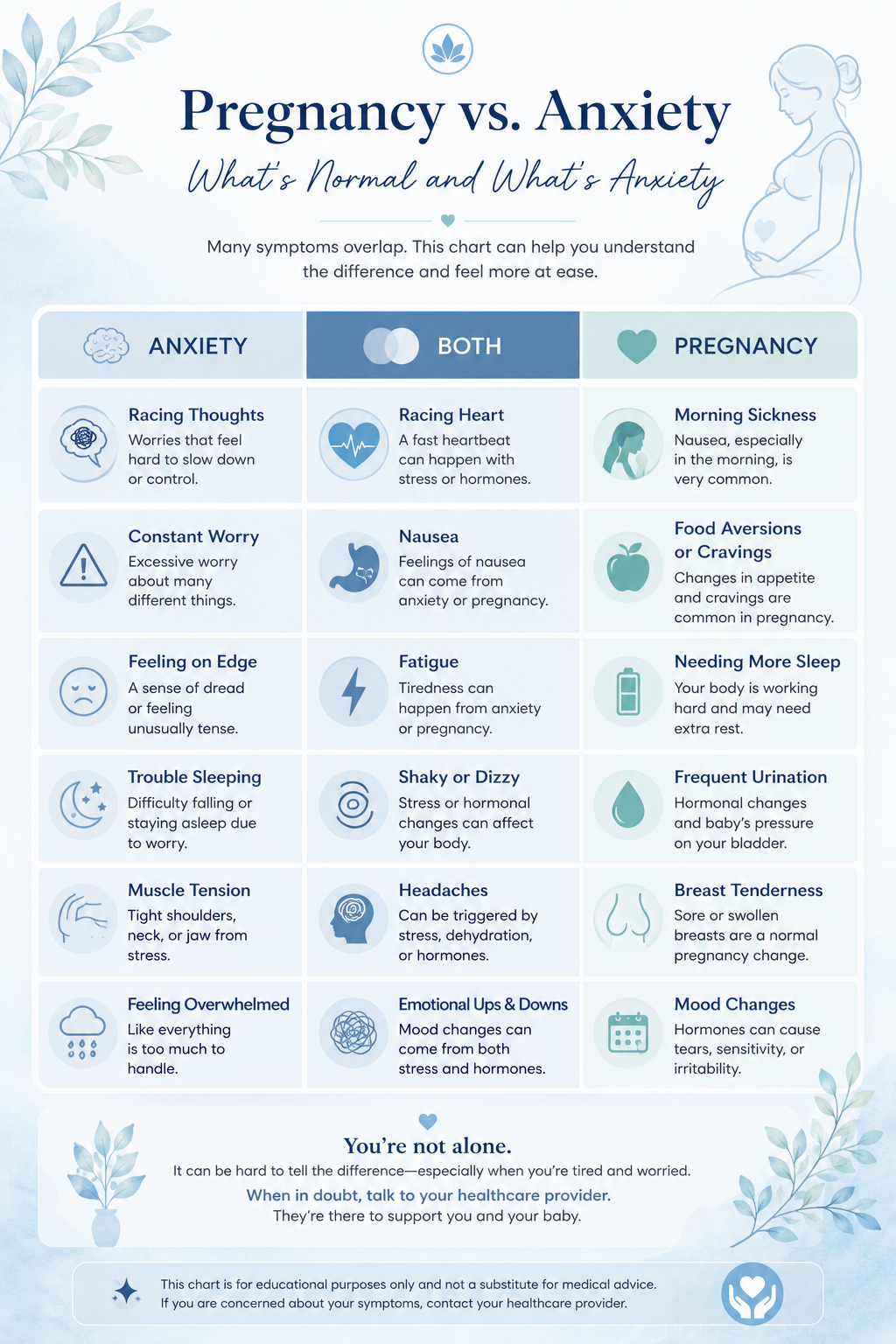
One of the frustrating things about pregnancy is that many normal physical symptoms can overlap with the physical sensations of anxiety.
For example, you might wake up with:
These sensations don't necessarily mean you're anxious.
Likewise, they don't necessarily mean something is medically wrong.
Because anxiety and pregnancy share many physical symptoms, it's sometimes difficult to tell where one ends and the other begins.
That uncertainty itself can create more worry.
If you're trying to tell the difference, our guide to the physical symptoms of pregnancy anxiety explains why so many symptoms can overlap with normal pregnancy changes.
Pregnancy doesn't always come with restful sleep.
You may wake up multiple times during the night to use the bathroom, struggle to get comfortable, experience vivid dreams, or simply find it difficult to stay asleep.
Even if you spend enough hours in bed, interrupted sleep can leave you feeling emotionally depleted the next morning.
When you're tired, everyday worries often feel heavier than they would after a good night's rest.
Tasks that normally seem manageable may suddenly feel overwhelming, and anxious thoughts can become much louder.
If you've also noticed your anxiety increasing after dark, you may find it helpful to read our guide on why pregnancy anxiety feels worse at night, since sleep and anxiety often influence one another.
If restless nights have also become part of your pregnancy, you may also find our guide to pregnancy sleep and anxiety helpful.
Before work starts.
Before appointments begin.
Before your family wakes up.
Before the day's distractions take over.
There are often very few things competing for your attention.
In that quiet space, worries that stayed in the background yesterday can suddenly move to the front of your mind.
Without conversations, tasks, or daily responsibilities to occupy your thoughts, anxiety can feel louder simply because there's less else demanding your attention.
Sometimes morning anxiety isn't about what's happening right now.
It's about everything your brain expects might happen later.
Perhaps you have an anatomy scan scheduled.
Maybe you're waiting for test results.
You might be worried about balancing work with pregnancy, caring for older children, or preparing for labor.
Your brain naturally tries to predict what's coming next so you can be prepared.
Unfortunately, anxious brains often overestimate potential problems and underestimate your ability to handle them.
That anticipation can make mornings feel especially overwhelming before anything has actually happened.
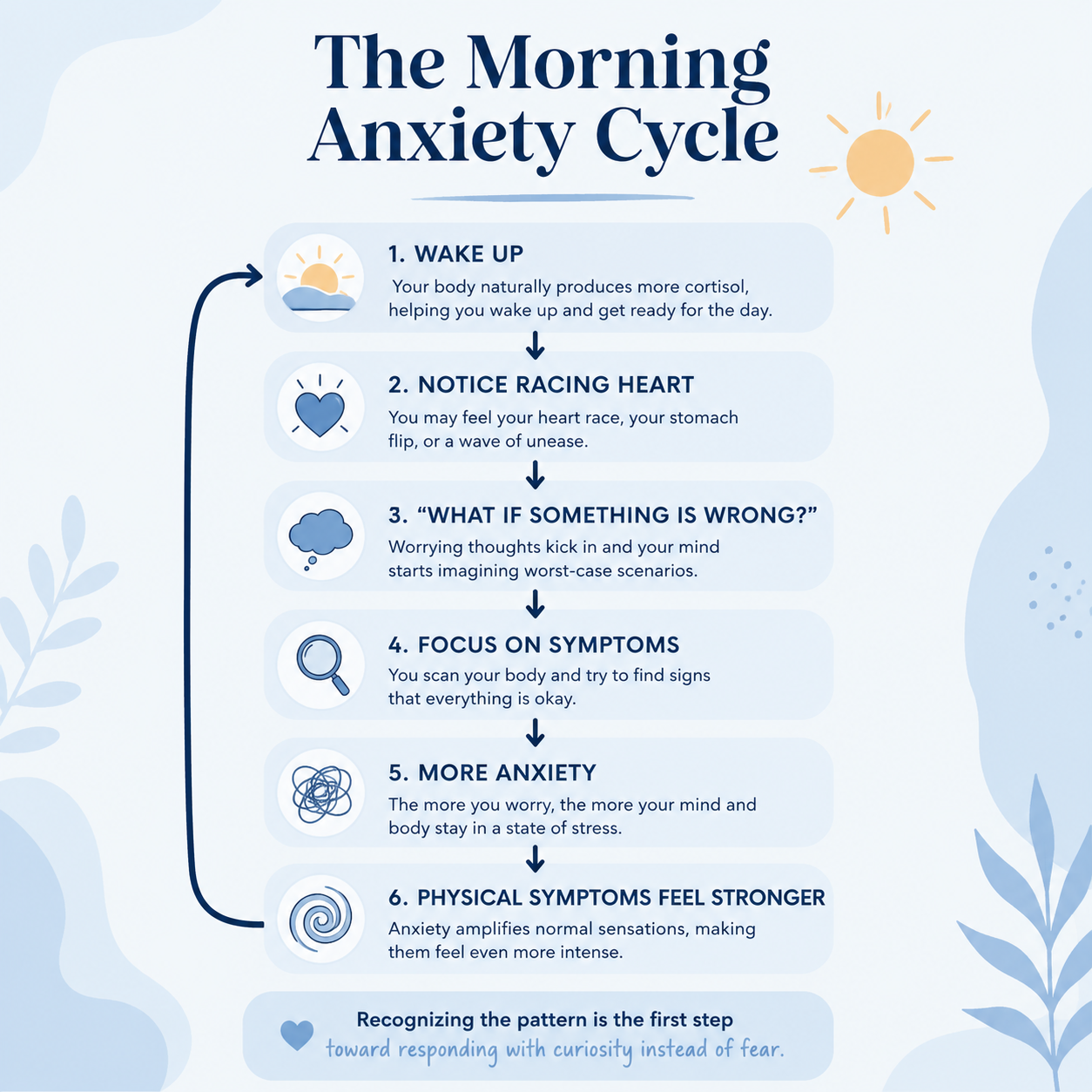
Sometimes morning anxiety can become a cycle that feeds itself.
You wake up and notice your heart beating a little faster than usual.
You wonder whether something is wrong.
Your attention becomes focused on every physical sensation.
The more you pay attention, the more noticeable those sensations become.
That increased awareness can create even more worry, making anxiety feel stronger than it actually was when you first opened your eyes.
Understanding this cycle doesn't make anxiety disappear overnight, but it can remind you that anxious thoughts and physical sensations often reinforce one another. Recognizing the pattern is the first step toward responding with curiosity instead of fear.
Morning anxiety can look different for everyone.
Some women experience mostly physical sensations, while others notice racing thoughts or overwhelming emotions.
You might experience:
These symptoms can occur with pregnancy anxiety, but they can also have other causes. If you're ever unsure whether what you're experiencing is related to anxiety or another medical condition, contact your healthcare provider for guidance.
Morning anxiety doesn't always feel the same throughout pregnancy.
Many women notice anxiety is strongest during the first trimester as they adjust to pregnancy, experience new symptoms, and wait for early prenatal appointments or ultrasounds.
During the second trimester, worries often shift toward anatomy scans, feeling the baby move, preparing the nursery, and balancing pregnancy with work or family life.
As your due date approaches, morning anxiety may become more focused on fear of labor and delivery, bringing your baby home, or wondering whether today will be the day labor begins.
Every pregnancy is different, and your worries may change as each stage brings new experiences and milestones.
If anxiety feels strongest first thing in the morning, it's easy to assume it means something is wrong.
But morning anxiety doesn't necessarily mean:
Morning anxiety can feel incredibly convincing, but anxious thoughts aren't always an accurate reflection of reality. Many expecting moms find that their anxiety eases as the day goes on or after they've had a chance to eat, move around, and settle into their routine.
While you may not be able to prevent every anxious morning, small habits can make those first moments of the day feel gentler and more manageable.
It's tempting to start scrolling as soon as you wake up.
Emails.
News.
Social media.
Text messages.
But jumping straight into information overload can make an already busy mind feel even busier.
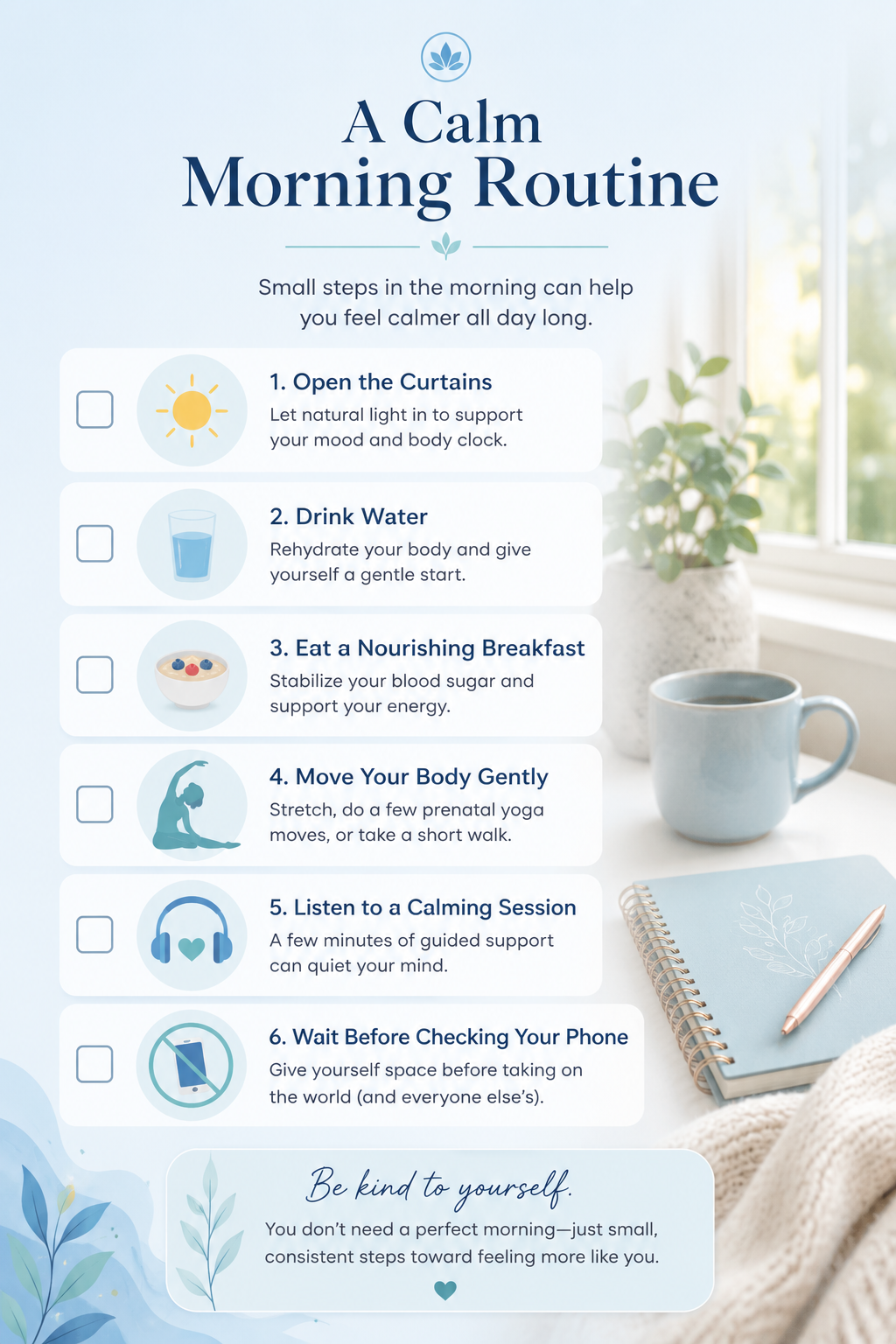
Instead, try giving yourself just two or three quiet minutes before looking at your phone.
Notice your breathing.
Stretch gently.
Take a sip of water.
Allow your nervous system a chance to wake up before the outside world rushes in.
For many moms, even this small change can help mornings feel less overwhelming.
The first few minutes after you wake up can set the tone for the rest of your morning.
If anxiety tends to greet you before your feet even touch the floor, remember that you don't have to "fight" the feeling. Instead, focus on creating small moments of calm that help your body and mind settle before the day begins.
When we're anxious, it's common to breathe more quickly or more shallowly without realizing it.
Rather than trying to force yourself to relax, simply notice your breathing.
Try slowly inhaling through your nose and exhaling gently through your mouth. Focus on making your exhale slightly longer than your inhale if that feels comfortable.
You don't need to do this for ten minutes. Even one or two minutes of slow breathing may help you feel more grounded before getting out of bed.
During pregnancy, your body is working hard around the clock.
After going all night without eating, some women wake up feeling hungry, shaky, or nauseated. These sensations can sometimes feel similar to anxiety.
If your healthcare provider has recommended eating soon after waking, consider keeping a simple breakfast or snack nearby so you don't have to wait long before eating.
Staying hydrated throughout the morning is important, too, especially if morning sickness has made it difficult to drink enough fluids.
Opening the curtains or stepping outside for a few minutes can help signal to your body that it's time to begin the day.
Natural daylight supports your body's internal clock and may help you feel more awake and alert.
You don't need an intense workout or a long walk. Sitting outside with your morning tea, taking a short stroll around the block, or simply standing on your porch for a few minutes may be enough to help you feel more present.
You don't have to "exercise away" anxiety.
Instead, think about movement as a way of releasing physical tension.
Gentle stretching, prenatal yoga, or a short walk can help loosen tight muscles and shift your attention away from racing thoughts.
Always follow your healthcare provider's recommendations about physical activity during pregnancy, especially if you have any pregnancy-related complications.
Anxiety often convinces us that every uncertain thought deserves immediate attention.
"What if something is wrong?"
"What if today's appointment brings bad news?"
"What if I'm not ready?"
Instead of trying to answer every frightening question, remind yourself that thoughts are not facts.
Many anxious thoughts are simply your brain trying to prepare for uncertainty.
You don't have to solve every possible problem before breakfast.
Sometimes it helps to gently tell yourself:
"I don't have all the answers right now, and that's okay."
"I'll take today one step at a time."
If you find yourself living with a constant worry that something is wrong, you're not alone. Many expecting moms experience these recurring thoughts during pregnancy.
Many moms find it helpful to begin the day with a guided relaxation, mindfulness exercise, or calming audio instead of immediately diving into emails or social media.
Creating a peaceful morning routine—even if it only lasts five or ten minutes—can help you transition into the day feeling more grounded.
The goal isn't to eliminate every anxious thought. It's to give your nervous system a chance to settle before life's demands begin competing for your attention.
When anxiety is high, it's natural to look for immediate reassurance. But some habits can unintentionally keep the cycle going.
Try to avoid:
Instead, give yourself a few minutes to breathe, move gently, or follow a calming morning routine before deciding what needs your attention.
If mornings feel especially difficult, try this simple routine:
Minute 1–2: Take a few slow, comfortable breaths before getting out of bed.
Minute 3–4: Drink a glass of water and, if appropriate, eat a light snack or breakfast.
Minute 5–7: Open the curtains or step outside for a few minutes of natural daylight.
Minute 8–10: Listen to a calming audio, stretch gently, or simply sit quietly before checking your phone.
You don't have to do this perfectly every morning. Even one or two of these habits may help you start the day feeling more grounded.
Occasional worry is a common part of pregnancy.
However, if anxiety is becoming persistent or feels difficult to manage, you don't have to handle it alone.
Consider speaking with your healthcare provider if anxiety is:
Your provider can help determine whether anxiety may be contributing to what you're experiencing and discuss treatment options that are appropriate for you.
If you experience severe chest pain, difficulty breathing, fainting, thoughts of harming yourself, or thoughts of harming your baby, seek immediate medical care or emergency assistance.
Pregnancy hormones affect many parts of the body and may influence mood alongside other factors such as sleep, physical discomfort, previous experiences with anxiety, and the normal emotional adjustments that come with pregnancy.
For many women, morning anxiety is likely influenced by a combination of physical and emotional factors rather than a single cause.
Some women notice more anxiety during the first trimester because everything feels new and uncertain.
You may also be coping with nausea, fatigue, changing hormone levels, and waiting for early prenatal appointments.
Others notice anxiety later in pregnancy as labor approaches or as they prepare for life with a new baby.
Every pregnancy is different.
A faster heartbeat can occur during pregnancy for many reasons, including normal cardiovascular changes, physical activity, dehydration, anxiety, or other medical conditions.
If a racing heart is new, severe, persistent, or accompanied by concerning symptoms such as chest pain, fainting, or severe shortness of breath, contact your healthcare provider promptly.
It can.
Nausea, dizziness, and shakiness may feel similar to the physical sensations of anxiety.
If you're already worried, those sensations can sometimes make anxious thoughts feel even stronger.
The reverse can also happen—feeling anxious may make nausea feel more noticeable for some people.
Feeling anxious during pregnancy doesn't necessarily mean something is wrong or that you've harmed your baby. If you're concerned about how you're feeling, talk with your healthcare provider.
Anxiety often follows patterns rather than remaining constant throughout the day. For some women, mornings bring natural hormonal changes, fewer distractions, poor sleep, or anticipation about the day ahead, making anxiety feel more noticeable shortly after waking.
Morning anxiety can make the day feel overwhelming before it has even begun.
But waking up with anxious thoughts doesn't mean you're doing pregnancy wrong.
It doesn't mean you're a bad mom.
And it doesn't mean the rest of your day will feel this way.
Take it one small step at a time.
A few slow breaths.
A nourishing breakfast.
A moment of kindness toward yourself.
If morning anxiety has been making pregnancy feel harder, MamaZen's guided pregnancy sessions are designed to help you feel calmer, more grounded, and more confident as you navigate pregnancy.
You don't have to face pregnancy anxiety alone.
References
- American College of Obstetricians and Gynecologists. Anxiety and Pregnancy. Accessed July 24, 2026. https://www.acog.org/womens-health/faqs/anxiety-and-pregnancy
- American College of Obstetricians and Gynecologists. Screening and Diagnosis of Mental Health Conditions During Pregnancy and Postpartum: ACOG Clinical Practice Guideline No. 4. Obstetrics & Gynecology. 2023;142(5):1262–1288. https://pubmed.ncbi.nlm.nih.gov/37486660/
- Dunkel Schetter C, Guardino CM, et al. Pregnancy Anxiety and Prenatal Cortisol Trajectories. Biological Psychology. 2014. https://pmc.ncbi.nlm.nih.gov/articles/PMC4170592/
- de Weerth C, Buitelaar JK. Physiological Stress Reactivity in Human Pregnancy: A Review. Neuroscience & Biobehavioral Reviews. 2005;29(2):295–312. (Background on stress physiology during pregnancy.) https://pubmed.ncbi.nlm.nih.gov/15811500/
Irin Rubin is the CEO and co-founder of MamaZen and the author of The MamaZen Method. Inspired by her own experience with pregnancy and postpartum anxiety, she has spent years developing mindfulness and cognitive hypnotherapy programs that support emotional well-being during pregnancy, birth, postpartum, and parenting.


Science-based Mindpower Sessions® help you create lasting change for you and your family.

Get instant relief right when you need it with our 5-7 Minute Emergency Sessions.

Empowering Kids to conquer anxiety, build confidence, and foster positive self-talk.

Supporting and guiding you through every step of parenthood.
Get expert tips to raise confident kids.
Enter email for access!