
If you've found yourself wondering…
...you're far from alone.
Many expecting mothers spend a surprising amount of time worrying that something might happen to their baby. These fears can appear even when every appointment has been reassuring.
The good news is that these thoughts are incredibly common and they don't mean you're a bad mother or that something is actually wrong.

Your mind naturally starts scanning for potential dangers, even when there aren't any.
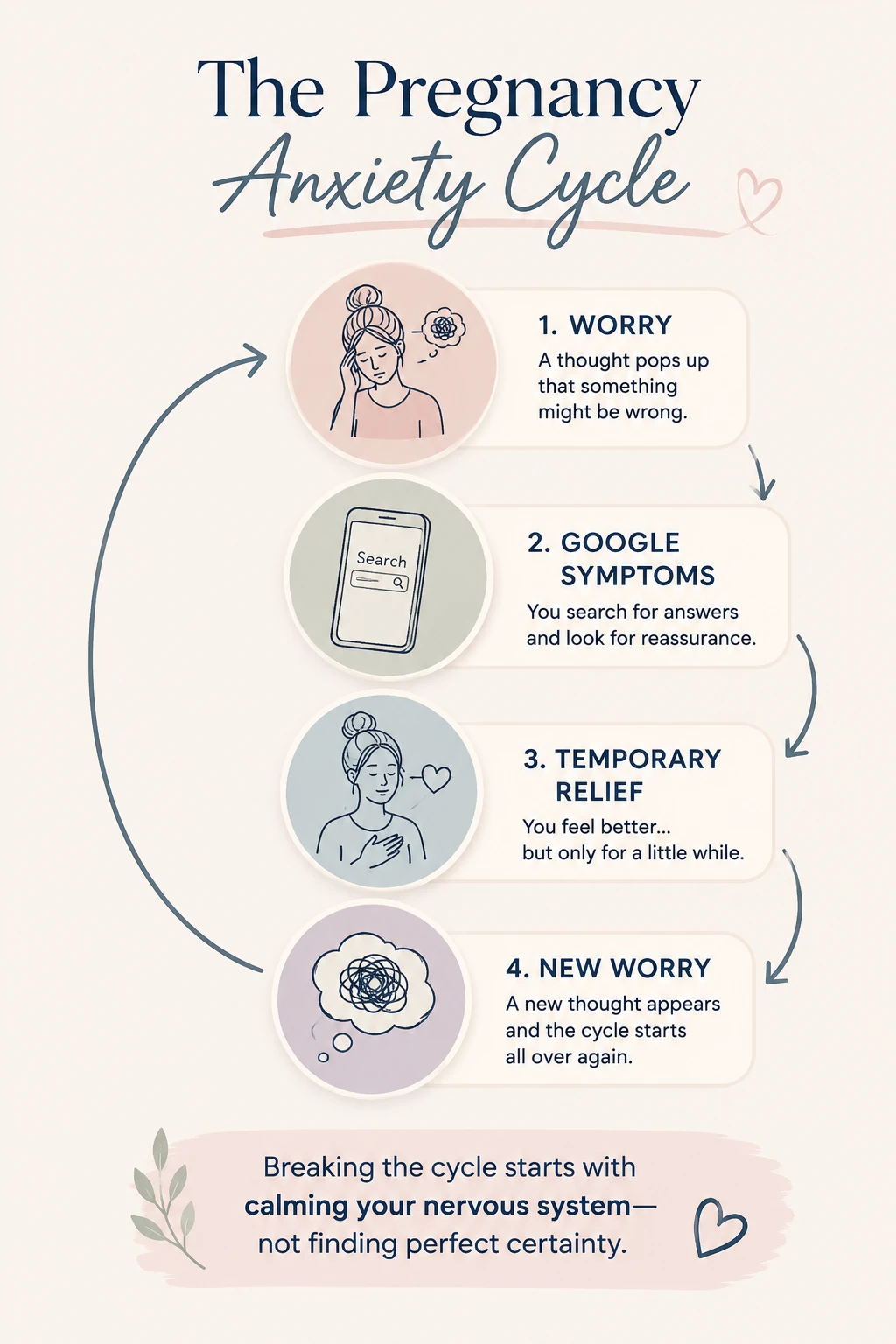
Many moms notice a cycle:
"I'll feel better after my next appointment."
The appointment goes well.
Relief lasts a day or two.
Then a new worry appears.
This happens because anxiety isn't always looking for facts—it's looking for certainty.
And pregnancy rarely offers complete certainty.
It can be confusing when you know your doctor says everything looks healthy, yet your mind keeps asking, "But what if they missed something?"
This doesn't mean you're irrational or "overthinking."
Your brain is doing exactly what it was designed to do.
During pregnancy, many women become much more aware of anything that could potentially affect their baby. Every new sensation, every unfamiliar feeling, and every milestone can suddenly seem incredibly important.
From an evolutionary perspective, this heightened awareness may have helped parents notice potential dangers and protect their babies. Today, however, that same protective instinct can sometimes become overactive, causing your mind to constantly search for problems that aren't actually there.
That's why perfectly normal pregnancy symptoms can sometimes trigger anxious thoughts.
A small cramp becomes:
"What if something is wrong?"
A quieter morning of baby movement becomes:
"Should I call my doctor?"
A brief headache becomes:
"Could this be something serious?"
When anxiety is involved, your brain often fills in the gaps with worst-case scenarios because uncertainty feels uncomfortable. Recognizing this pattern doesn't make the thoughts disappear overnight, but it can help you respond to them with greater self-compassion instead of believing every fearful thought.
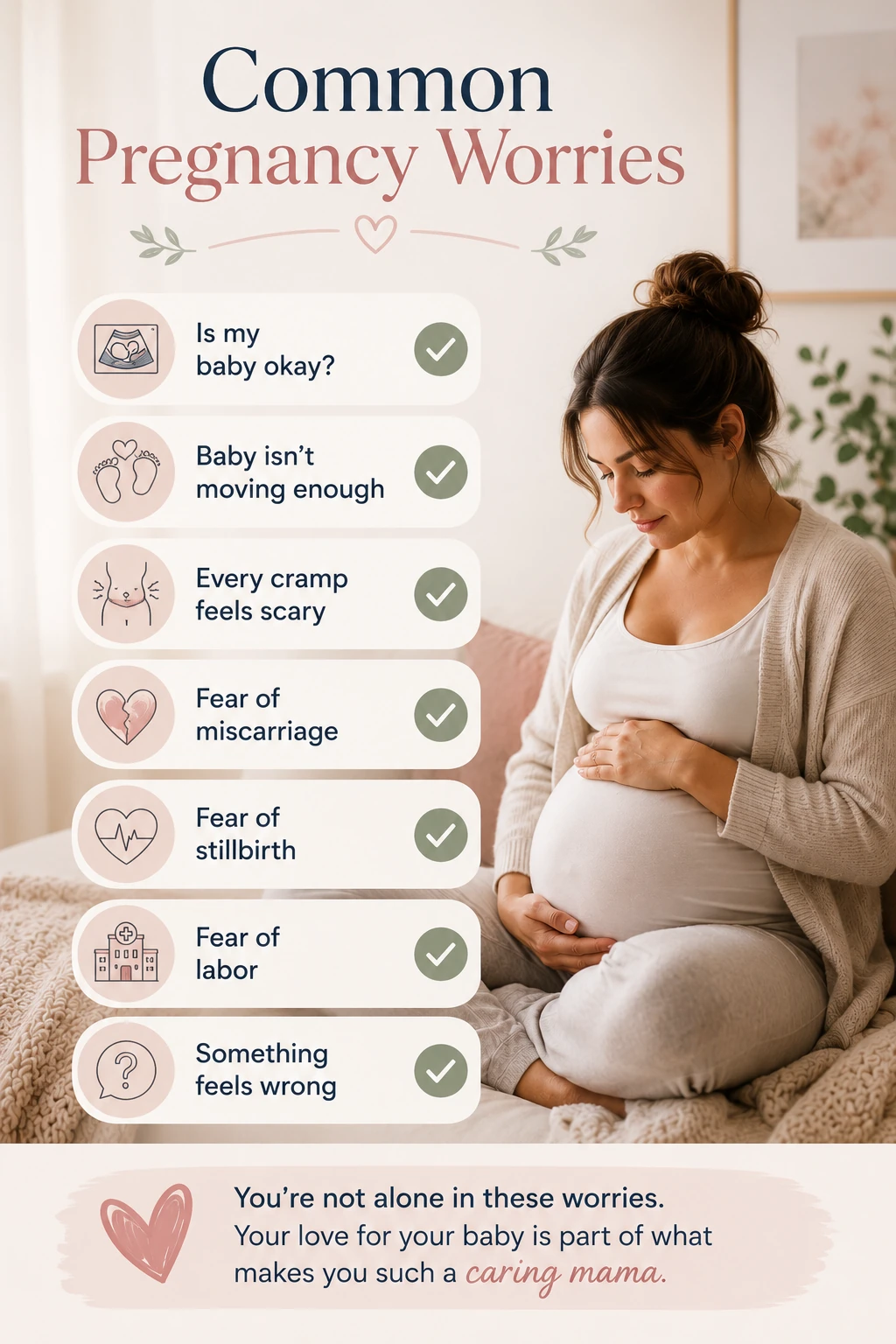
Many moms worry about:
Knowing these worries are common can help you feel less alone.
Many moms notice that certain situations make their worries feel much stronger. Some of the most common triggers include:
Recognizing your personal triggers can help you prepare for them. Instead of being caught off guard by a spike in anxiety, you can remind yourself that your nervous system is reacting to uncertainty—not necessarily to danger.
Occasional concern is normal.
But it may be time to seek extra support if you notice:
Many expecting mothers find themselves searching for reassurance throughout the day.
You might:
These behaviors usually come from a place of love and concern.
The problem is that reassurance often brings relief for only a short time before a new worry appears. Over time, this cycle can unintentionally teach your brain that every anxious thought needs to be solved immediately.
Learning to tolerate a little uncertainty—while continuing to follow your healthcare provider's guidance—can gradually help break this cycle.
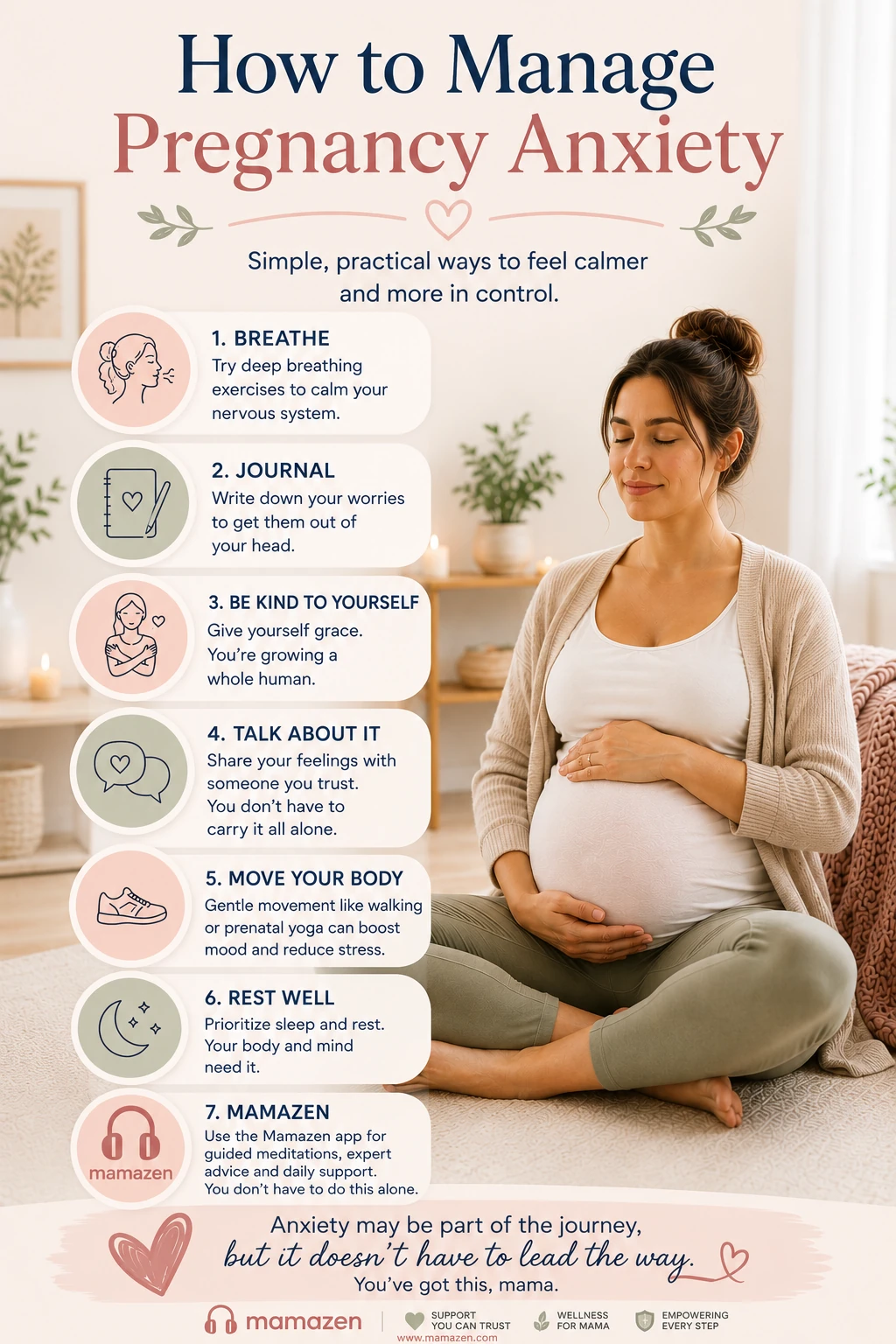
Avoid endless internet searches and rely on guidance from your healthcare provider.
Ask yourself:
"Do I have new information that suggests something is wrong, or is my anxious mind filling in the blanks?"
Rather than imagining every possible outcome, focus on today.
Right now:
Simple practices like deep breathing, mindfulness, guided relaxation, or pregnancy-focused meditation can help shift your body out of a heightened stress response.
When you're worried about your baby, it's natural to look for certainty. Unfortunately, some common habits can actually make anxiety feel stronger over time.
These include:
Instead, try limiting your information to trusted medical sources and your own healthcare provider. Giving your mind fewer opportunities to spiral can make it easier to stay grounded in the present.
Always contact your provider if you experience symptoms they have advised you to report, such as:
Trust your instincts when something feels physically wrong. It's always appropriate to seek medical advice if you're concerned.

The next time your mind tells you that something must be wrong, pause for a moment before reacting.
Ask yourself:
Then slowly inhale through your nose for four seconds, hold for two seconds, and exhale gently for six seconds. Repeat this a few times while bringing your attention back to the present moment.
This doesn't mean ignoring symptoms that need medical attention. Instead, it can help you separate anxiety-driven thoughts from situations that truly require you to contact your healthcare provider.
Many expecting mothers never tell anyone how often they worry because they're afraid they'll sound dramatic or irrational.
In reality, concerns about your baby's health are among the most common emotional experiences during pregnancy.
Talking openly with your partner, a trusted friend, or your healthcare provider can help you feel supported and remind you that you don't have to carry these worries by yourself.
If your anxiety starts interfering with your sleep, daily activities, relationships, or ability to enjoy your pregnancy, reaching out for professional support is an important step. Pregnancy anxiety is common, and help is available.
The fact that you're worried doesn't mean something bad is happening.
More often, it reflects how deeply you already love and want to protect your baby.
You don't need to eliminate every anxious thought.
You simply need support learning how to respond to those thoughts with greater calm and confidence.
If you're looking for extra emotional support during pregnancy, MamaZen offers guided sessions for pregnancy anxiety, better sleep, emotional wellness, birth preparation, and relaxation—helping you feel calmer and more connected throughout your pregnancy journey.
Yes. Many expecting mothers experience this fear at some point during pregnancy. It's common to worry about your baby's health, development, or whether every symptom is normal. While occasional worry is a natural part of pregnancy, persistent anxiety that interferes with daily life deserves attention and support.
Pregnancy naturally activates your brain's protective instincts. Hormonal changes, uncertainty, and the deep emotional bond you are already forming with your baby can make your mind constantly scan for possible problems—even when everything is progressing normally.
Many women feel relieved immediately after hearing their baby's heartbeat or receiving reassuring scan results. However, anxiety often seeks certainty rather than reassurance. Once one concern is resolved, the anxious mind may quickly find something new to worry about.
Yes. Anxiety often causes the brain to focus on worst-case scenarios, even when there is no evidence that something is wrong. These thoughts can feel very convincing, but they are not reliable indicators that your pregnancy is in danger.
While it's impossible to eliminate every worry, you can reduce anxiety by limiting excessive Googling, following your healthcare provider's advice, practicing mindfulness or relaxation techniques, focusing on the present moment, and seeking emotional support when needed.
Always contact your healthcare provider if you experience symptoms they have advised you to report, such as vaginal bleeding, leaking fluid, severe pain, a significant decrease in fetal movement later in pregnancy, severe headache, vision changes, or anything else that concerns you. If you believe something may be physically wrong, it's always appropriate to seek medical advice.
Occasional worry is a normal part of pregnancy. However, if fear becomes constant, keeps you awake at night, causes panic attacks, leads to repeated reassurance-seeking, or prevents you from enjoying your pregnancy, you may be experiencing pregnancy anxiety. Speaking with your healthcare provider can help you access the right support.
For some mothers, pregnancy worries improve after birth. For others, anxiety may continue into the postpartum period. Learning healthy coping strategies during pregnancy can help support your emotional well-being both before and after your baby arrives.
Irin Rubin is the CEO and co-founder of MamaZen and the author of The MamaZen Method. Inspired by her own experience with pregnancy and postpartum anxiety, she has spent years developing mindfulness and cognitive hypnotherapy programs that support emotional well-being during pregnancy, birth, postpartum, and parenting.


Science-based Mindpower Sessions® help you create lasting change for you and your family.

Get instant relief right when you need it with our 5-7 Minute Emergency Sessions.

Empowering Kids to conquer anxiety, build confidence, and foster positive self-talk.

Supporting and guiding you through every step of parenthood.
Get expert tips to raise confident kids.
Enter email for access!