
Your heart suddenly starts racing.
Your chest feels tight.
You feel lightheaded.
Your stomach is in knots.
Within seconds, your mind jumps to one terrifying thought:
"Is something wrong with my baby?"
If you've ever felt this way during pregnancy, you're not alone.
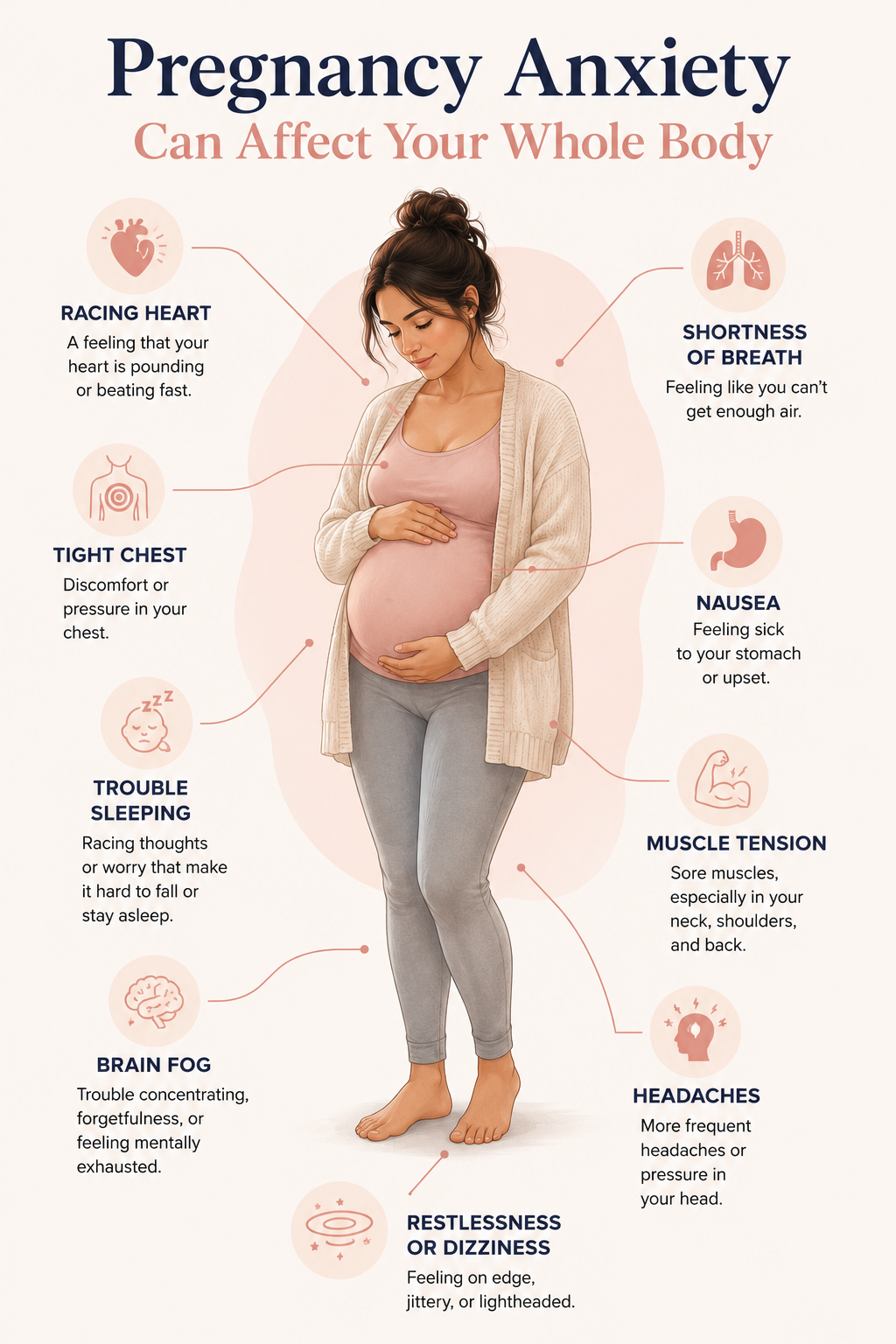
Many expecting moms are surprised to learn that pregnancy anxiety doesn't just affect their thoughts, it can also affect their bodies. A racing heart, muscle tension, trouble sleeping, nausea, headaches, and shortness of breath can all feel frightening, especially when you're trying to protect your growing baby.
The challenge is that pregnancy itself causes many physical changes. As your body adapts to support your baby, it's not always easy to know which symptoms are part of a healthy pregnancy, which may be related to stress or anxiety, and when it's time to contact your healthcare provider.
The good news is that understanding how anxiety can affect your body may help you feel less frightened by these sensations and more confident about knowing when to seek reassurance.
In this guide, you'll learn:
While some physical symptoms require medical evaluation, many moms also benefit from learning simple ways to calm their nervous system. Throughout this article, we'll share gentle strategies that can help, including guided relaxation techniques available in MamaZen.
Yes.
Anxiety doesn't only affect your thoughts, it can affect your entire body.
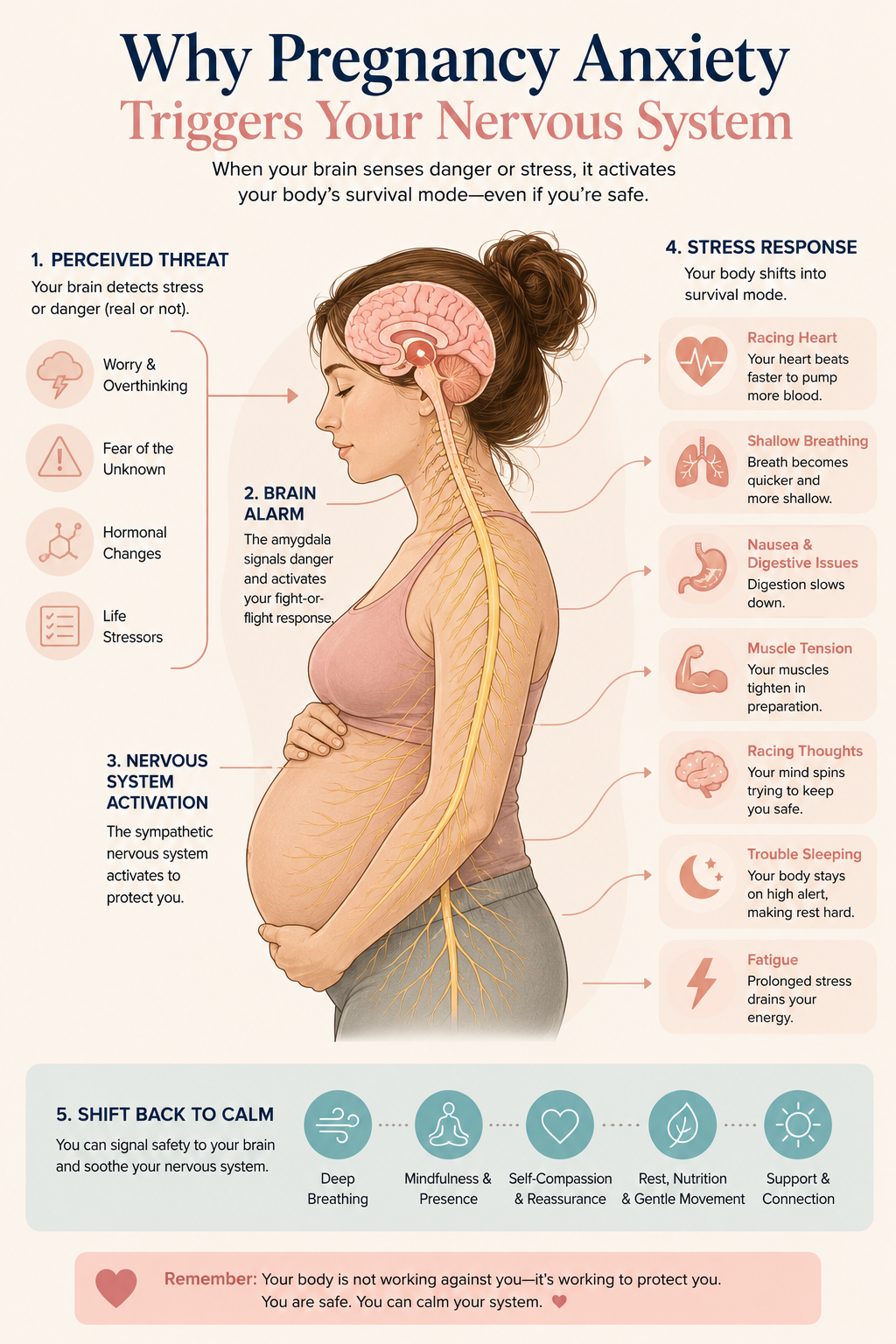
Your brain and body are constantly communicating through your nervous system. When your brain senses a possible threat, it activates your body's natural stress response, sometimes called the fight-or-flight response.
This response is designed to protect you.
Stress hormones, including adrenaline and cortisol, prepare your body to respond quickly by increasing your heart rate, changing your breathing, tightening your muscles, and making you more alert.
During pregnancy, this protective system can become even more sensitive.
That's not because you're doing anything wrong.
It's because your brain knows someone incredibly important depends on you.
Many women naturally become more aware of anything that could affect their baby's health, which can make normal physical sensations feel much bigger than they actually are.
It's important to remember that these physical symptoms are real.
They are not "all in your head."
However, they can have many possible causes—including normal pregnancy changes, anxiety, or other medical conditions. If you're ever unsure about a symptom, it's always appropriate to contact your healthcare provider.
Pregnancy is one of the biggest physical and emotional transitions your body will ever experience.
Your hormones are changing.
Your heart is working harder.
Your breathing changes as your baby grows.
Sleep often becomes lighter and more interrupted.
You're also preparing emotionally for birth and becoming a parent.
All of these changes can make your nervous system more sensitive.
Many moms notice that worry becomes stronger around important pregnancy milestones, such as:
These worries don't mean something is wrong.
In many cases, they simply reflect how deeply you already care about your baby.
Learning why your body reacts this way can help you respond with more compassion instead of more fear.
Feeling your heart suddenly pound or beat faster can be one of the most alarming symptoms during pregnancy.
Many moms notice it while lying in bed at night, reading something online, or after a stressful thought appears seemingly out of nowhere.
Pregnancy naturally increases your blood volume by up to 50%, which means your heart is already working harder than it did before pregnancy.
Anxiety can temporarily increase your heart rate even further by activating your body's stress response.
For many women, the sensation passes as their nervous system begins to settle.
When to contact your healthcare provider: If your racing heart is severe, persistent, associated with chest pain, fainting, or significant shortness of breath, seek medical advice promptly.
What Can Help? Many moms find guided relaxation helpful for unwinding. MamaZen includes short sessions created for pregnancy-related worry and physical tension.
Many pregnant women describe feeling like they can't quite catch a satisfying deep breath.
This can happen for several reasons.
As your uterus grows, it changes how your lungs expand. Anxiety can also cause your breathing to become faster or more shallow, making you feel even more breathless.
Together, these changes can feel frightening, even when your pregnancy is progressing normally.
When to contact your healthcare provider: Severe breathing difficulty, chest pain, blue lips, or symptoms that suddenly worsen should always be evaluated immediately.
Chest tightness is one of the physical symptoms that most often convinces moms something serious is happening.
Stress naturally causes muscles around the chest, shoulders, and upper back to tighten.
That tension can create pressure, discomfort, or the feeling that it's difficult to relax your chest.
Important: Chest pain should never automatically be assumed to be anxiety. If you're unsure about your symptoms, or they are severe, persistent, or accompanied by other concerning symptoms, contact your healthcare provider immediately.
Your brain and digestive system are closely connected.
Pregnancy hormones already affect digestion, and anxiety can make nausea, stomach discomfort, bloating, or changes in appetite feel even more noticeable.
Sometimes it's difficult to know which came first—the anxiety or the nausea.
You're physically exhausted.
But your brain won't switch off.
Many expecting moms find that bedtime becomes the moment when every worry suddenly gets louder.
Questions about labor, baby's health, or tomorrow's appointment can begin replaying over and over.
Pregnancy itself often makes sleep lighter, and anxiety can make it even harder to fall asleep or stay asleep.
What Can Help? When your mind won't slow down at bedtime, many moms find it helpful to listen to a guided relaxation session before sleep. MamaZen's Pregnancy Sleep sessions are designed to support relaxation before bedtime and create a calmer bedtime routine.
Have you ever noticed that your shoulders are up by your ears?
Or that you've been clenching your jaw without realizing it?
Muscle tension is one of the most common physical signs of stress and anxiety. When your brain senses a potential threat—even if it's simply uncertainty—it naturally prepares your body to react. One of the ways it does that is by tightening your muscles.
During pregnancy, that tension often builds in your:
Many moms don't realize how much tension they're carrying until they intentionally stop and relax.
Headaches are common during pregnancy for many reasons.
Hormonal changes, dehydration, poor sleep, changes in caffeine intake, muscle tension, and stress can all play a role.
If you've been feeling anxious for days or weeks, it's understandable that your body may begin responding physically.
While many headaches during pregnancy are harmless, severe headaches, headaches accompanied by vision changes, swelling, or high blood pressure require prompt medical evaluation.
Forgetting why you walked into a room.
Losing your train of thought.
Reading the same sentence three times.
Sound familiar?
"Pregnancy brain" is something many moms experience, and anxiety can make it even more noticeable.
When your brain is constantly scanning for possible problems, it has fewer mental resources available for concentration and memory.
That doesn't mean anything is wrong.
It simply means your brain is working overtime.
What Can Help? Constant worry can leave your mind feeling exhausted. Taking just a few minutes each day to calm your nervous system may help you feel more focused and emotionally balanced.
Some moms describe pregnancy anxiety as never being able to completely relax.
Even when everything seems fine, their body still feels ready for something to happen.
This is another sign that your nervous system may still be in a heightened state of alert.
Feeling dizzy during pregnancy can be unsettling.
There are many possible causes, including:
Anxiety can also contribute by changing your breathing or increasing muscle tension.
Because dizziness has many possible causes, it's important not to assume anxiety is the only explanation.
If dizziness is persistent, severe, or associated with fainting, contact your healthcare provider.
One of the hardest parts about pregnancy anxiety is that many symptoms overlap with normal pregnancy changes.
This can make it difficult to know whether what you're feeling is related to pregnancy, anxiety, or something else entirely.
The table below is intended as general information—not as a way to diagnose yourself.

If you're ever unsure about a symptom, trust your instincts and contact your healthcare provider.
It's important to remember that anxiety should never be used to dismiss symptoms that could have another medical cause.
Although anxiety can contribute to physical symptoms, every pregnancy is unique.
Always contact your healthcare provider if you experience:
You know your body better than anyone.
If something doesn't feel right, it's always appropriate to call your healthcare provider.
Most providers would much rather answer your questions than have you sit at home feeling frightened.
Sometimes hearing, "Everything looks healthy," can provide enormous reassurance.
And if anxiety is contributing to your symptoms, understanding that connection can be the first step toward feeling calmer.
When anxiety feels physical, it's easy to believe something is wrong with your body.
More often than not, your body is trying to protect you.
The goal isn't to eliminate every worried thought.
The goal is to help your body and mind settle into a calmer state in this moment.
Slow breathing can help activate your body's relaxation response.
Try this:
There's no need to breathe perfectly, simply making your exhale a little longer than your inhale may help your body begin to relax.
Gentle movement helps release physical tension.
Try:
Even five minutes can help.
Looking up symptoms often feels reassuring at first.
But for many moms, it actually fuels more worry.
Instead, choose trusted sources, write down your questions, and bring them to your healthcare provider.
You can love your baby deeply...
…and still feel anxious.
Those feelings don't make you a bad mom.
Talk to yourself the way you would comfort a close friend.
Your nervous system benefits from regular moments of rest.
Whether it's mindfulness, gentle breathing, prayer, meditation, or guided relaxation, spending even 10 minutes each day practicing calm can help you feel more emotionally grounded over time.
Good sleep supports emotional well-being.
Try creating a calming bedtime routine that includes:
Progress, not perfection, is the goal.
Pregnancy isn't meant to be navigated alone.
Talk with your partner, a trusted friend, your midwife, OB-GYN, or another healthcare professional if anxiety is becoming difficult to manage.
Support is a sign of strength.
Yes. Anxiety can contribute to physical symptoms such as a racing heart, nausea, muscle tension, headaches, trouble sleeping, dizziness, and shortness of breath. These symptoms are real, but they can also have other causes, which is why it's important to discuss any concerning symptoms with your healthcare provider.
Yes.
Many moms feel temporary relief after hearing that everything looks healthy, only to find new worries appearing later.
This doesn't mean you're doing anything wrong—it reflects how a protective brain responds to uncertainty.
Without the distractions of the day, your mind has more opportunity to replay worries.
Fatigue may also make anxious thoughts feel more intense.
It can.
Stress and anxiety may affect digestion and make stomach discomfort or nausea feel more noticeable for some women.
Feeling worried from time to time is common during pregnancy. If anxiety feels persistent, overwhelming, or is affecting your daily life, talk with your healthcare provider so they can evaluate your symptoms and discuss appropriate support.
It can contribute to muscle tension and chest tightness.
However, chest pain should never automatically be assumed to be anxiety. Always seek medical advice if your symptoms are severe, persistent, or concerning.
While you may not be able to stop every worried thought, you can learn healthy ways to respond to them. Gentle breathing, mindfulness, limiting reassurance-seeking online, talking with someone you trust, and practicing relaxation regularly can all help.
If you have severe symptoms, symptoms that suddenly worsen, or you're simply unsure, it's always appropriate to contact your healthcare provider.
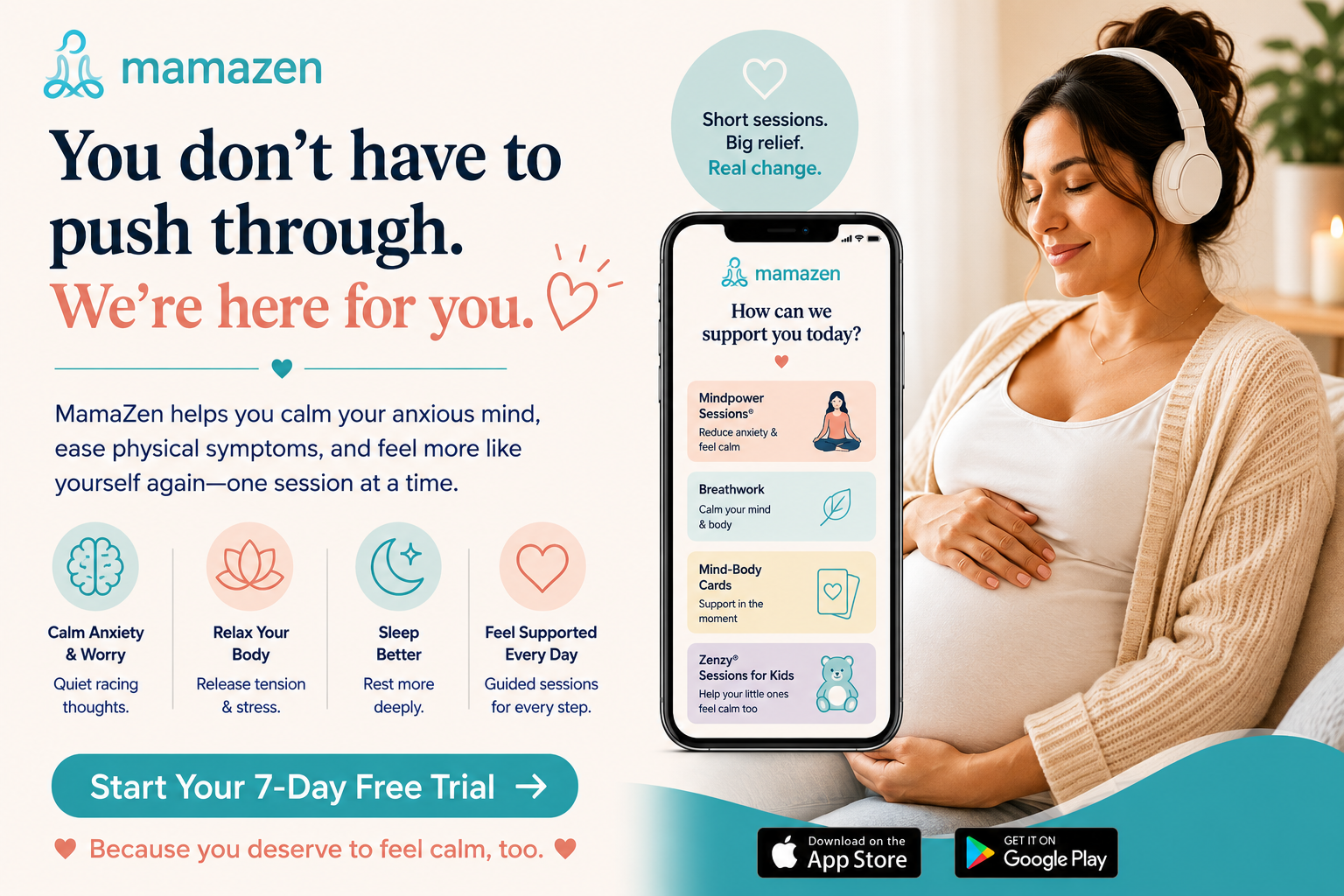
If worry is making it hard to enjoy your pregnancy, know that you don't have to navigate it alone.
MamaZen was created specifically for expecting moms who want to feel calmer, sleep better, and prepare for birth with greater confidence.
Inside the app you'll find:
✔️ Guided sessions for pregnancy anxiety
✔️ Better sleep support
✔️ Fear of labor sessions
✔️ Birth preparation audio
✔️ Breathing exercises
✔️ Daily moments of calm in just 10 minutes
Whether you're lying awake replaying "what if" thoughts or simply want to enjoy this chapter more fully, MamaZen is designed to support a calmer pregnancy.
👉 Explore Pregnancy Support in MamaZen
CEO & Co-Founder, MamaZen
Irin Rubin is the CEO and co-founder of MamaZen, an award-winning app that helps expecting and new moms reduce anxiety, improve sleep, and build emotional resilience. As a mother who experienced pregnancy and postpartum anxiety herself, she's passionate about creating practical, science-backed tools that help moms feel calmer, more confident, and supported throughout motherhood.


Science-based Mindpower Sessions® help you create lasting change for you and your family.

Get instant relief right when you need it with our 5-7 Minute Emergency Sessions.

Empowering Kids to conquer anxiety, build confidence, and foster positive self-talk.

Supporting and guiding you through every step of parenthood.
Get expert tips to raise confident kids.
Enter email for access!