
Pregnancy is often described as one of the happiest times in a woman's life. But for many moms-to-be, it can also be one of the most emotionally overwhelming.
If you've found yourself worrying constantly, overthinking every symptom, checking your phone for reassurance, struggling to sleep, or feeling like your mind won't slow down, you're not alone.
Pregnancy anxiety is incredibly common, yet it's something many women aren't prepared for.
Pregnancy brings enormous physical, emotional, and mental changes. Your body is creating a human being, your hormones are shifting dramatically, and your life is preparing for one of its biggest transitions.
At the same time, your brain is constantly processing questions such as:
Unlike many other stressful situations, pregnancy comes with months of uncertainty. There are countless things you can't control, and that lack of certainty can fuel anxiety.
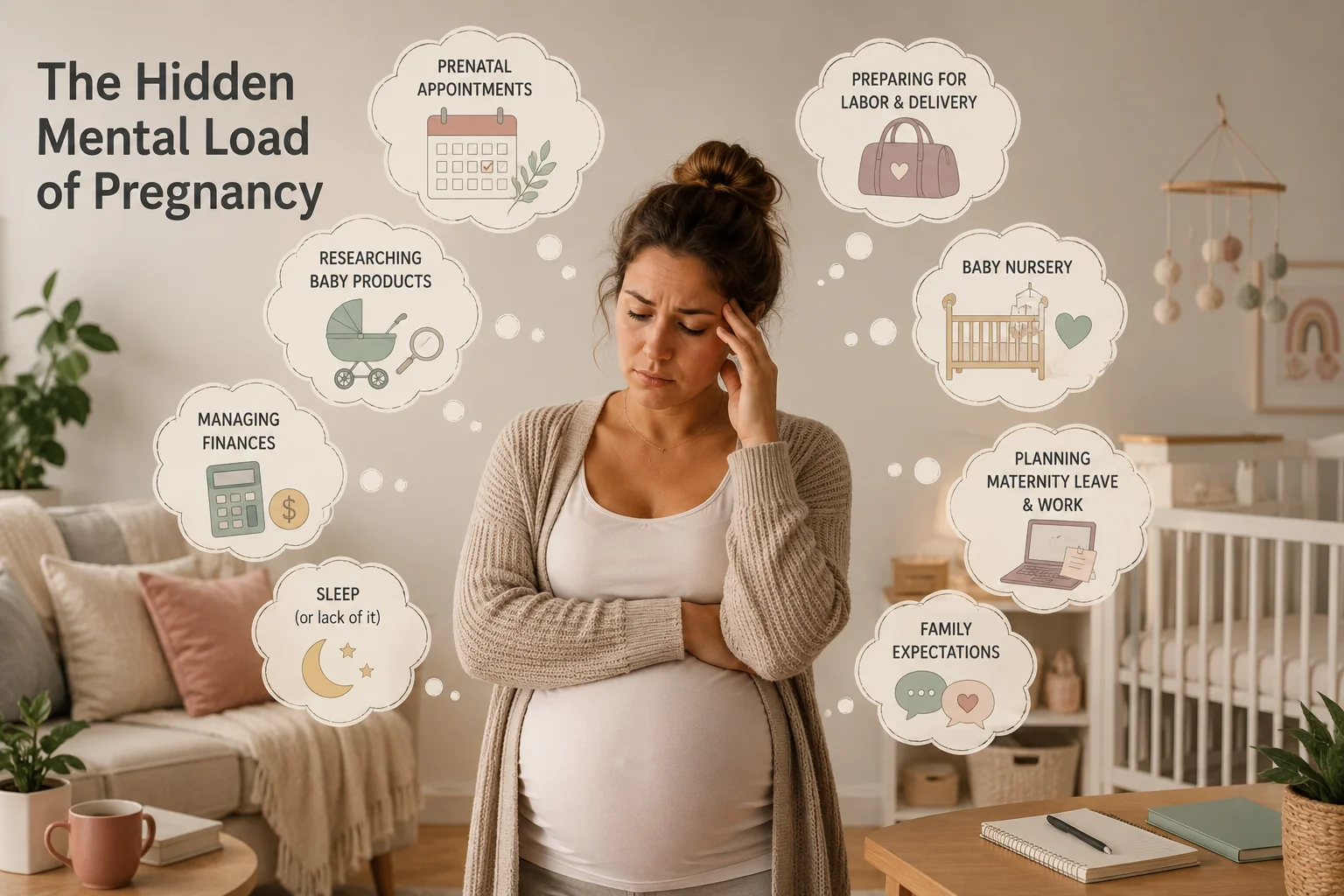
Many people focus on the physical symptoms of pregnancy, but few talk about the invisible mental load.
The mental load includes:
Even when you're resting, your mind may still feel busy.
This constant background processing can leave many expecting mothers feeling mentally exhausted long before their baby arrives.
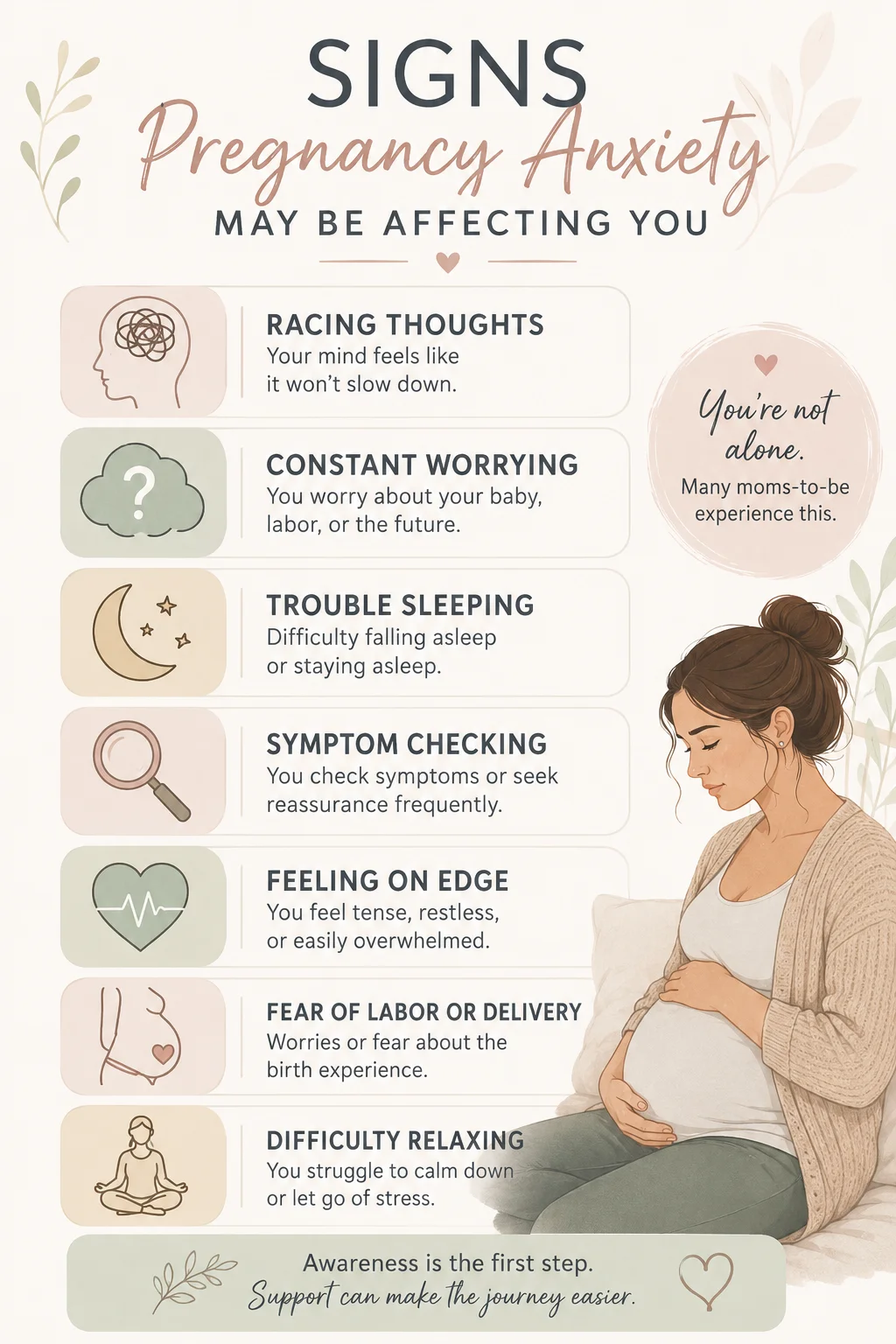
Pregnancy anxiety doesn't always look obvious.
Common signs include:
Some women describe it as feeling like their brain is always "on."
Many moms notice their anxiety becomes stronger after dark.
There are several reasons:
During the day, work, family responsibilities, and daily activities keep your brain occupied.
At night, the distractions disappear, leaving more room for worries to surface.
As pregnancy progresses, aches, pains, heartburn, and frequent bathroom trips can make sleep harder.
Poor sleep can increase anxiety and make worries feel bigger.
Pregnancy hormones influence mood, emotions, and stress responses.
These fluctuations can make emotional experiences feel more intense.
Many women worry that feeling anxious means they aren't coping well or that something bad will happen.
Neither is true.
Anxiety during pregnancy is often a normal response to a major life transition.
Your brain is trying to prepare for uncertainty and protect your baby.
The goal isn't to eliminate every anxious thought. The goal is learning how to respond differently when anxiety shows up.
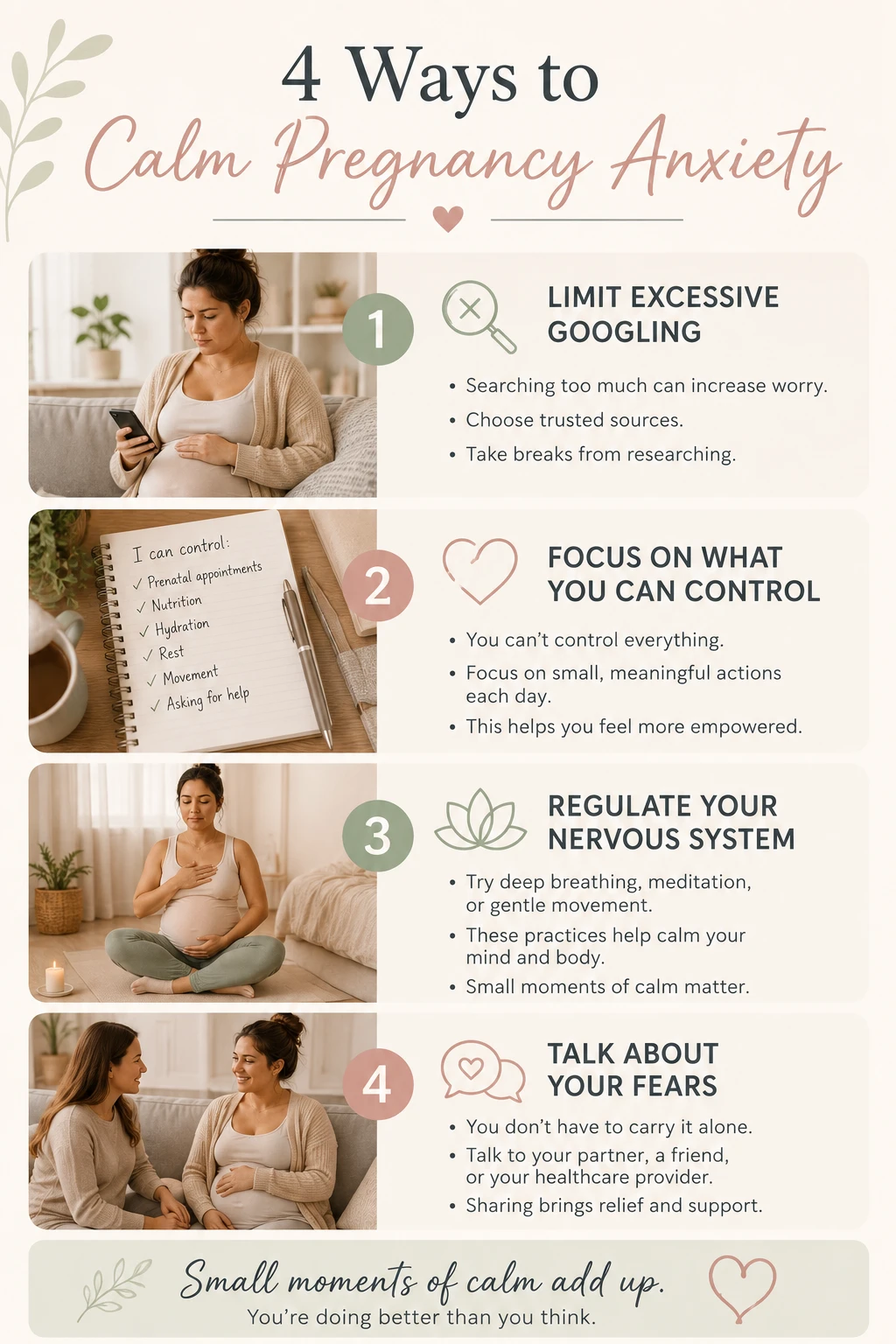
Searching symptoms repeatedly often provides temporary relief but can increase anxiety over time.
Choose trusted medical sources and avoid endless searching.
You can't control every outcome.
You can focus on:
Small moments of calm help signal safety to your brain.
Consider:
Anxiety often grows in isolation.
Sharing concerns with a trusted partner, friend, healthcare provider, or support community can help reduce the emotional burden.
Talk to your healthcare provider if anxiety is:
Support is available, and you do not have to manage it alone.
Pregnancy can be beautiful, exciting, and deeply emotional—all at the same time.
You don't need to be calm every moment.
You don't need to have everything figured out.
And you don't need to carry the mental load alone.
Taking even a few minutes each day to calm your mind can make a meaningful difference in how you experience pregnancy.
MamaZen provides guided support designed specifically for expecting mothers, including pregnancy anxiety relief, better sleep, emotional wellness, birth preparation, and relaxation sessions to help you feel more calm and supported throughout your pregnancy journey.
Yes. Many women experience increased worry, racing thoughts, or feelings of uncertainty during pregnancy. Pregnancy brings major physical, emotional, and life changes, making anxiety a common experience for expecting mothers.
Pregnancy anxiety can be caused by hormonal changes, fear of the unknown, concerns about your baby's health, labor worries, sleep disruption, and the mental load of preparing for a new baby. For many women, it's a combination of physical and emotional factors.
Many moms-to-be notice that anxiety feels stronger at night. During the day, work, family responsibilities, and daily tasks provide distractions. At night, racing thoughts often become more noticeable. Poor sleep, physical discomfort, and hormonal changes can also make anxiety feel more intense.
Common signs include:
Occasional anxiety is a normal part of pregnancy and is unlikely to harm your baby. However, persistent or severe anxiety can affect your well-being and may make pregnancy more challenging. If anxiety feels overwhelming, talk with your healthcare provider about support options.
Many women find relief through:
Consider speaking with your healthcare provider if anxiety:
Support is available, and you do not have to manage anxiety alone.
For some women, anxiety improves after delivery. For others, anxiety may continue into the postpartum period. Building healthy coping strategies during pregnancy can help support emotional wellness both before and after your baby arrives.
Irin Rubin is the CEO and co-founder of MamaZen and the author of The MamaZen Method. Inspired by her own experience with pregnancy and postpartum anxiety, she has spent years developing mindfulness and cognitive hypnotherapy programs that support emotional well-being during pregnancy, birth, postpartum, and parenting.


Science-based Mindpower Sessions® help you create lasting change for you and your family.

Get instant relief right when you need it with our 5-7 Minute Emergency Sessions.

Empowering Kids to conquer anxiety, build confidence, and foster positive self-talk.

Supporting and guiding you through every step of parenthood.
Get expert tips to raise confident kids.
Enter email for access!