
If you've ever climbed into bed hoping your mind would finally relax, only to find it racing faster than ever, you are far from alone.
One thought becomes another.
"Did the baby move enough today?"
"What if something is wrong?"
"Am I ready for labor?"
"Did I remember everything for the nursery?"
"What if I'm not a good mom?"
Before you know it, you've spent an hour imagining scenarios that haven't happened, replaying conversations with your doctor, and searching for reassurance that never seems to last.
Many expecting mothers experience racing thoughts during pregnancy. Racing thoughts can happen for many reasons during pregnancy. They may be related to normal emotional changes, stress, lack of sleep, or pregnancy anxiety. They can also occur alongside other mental health conditions or have non-pregnancy-related causes. If your symptoms are new, severe, or concerning, contact your healthcare provider for personalized advice.
The good news is that racing thoughts are common during pregnancy, and they don't mean something is wrong with you. Understanding why they happen is the first step toward feeling calmer and more in control.
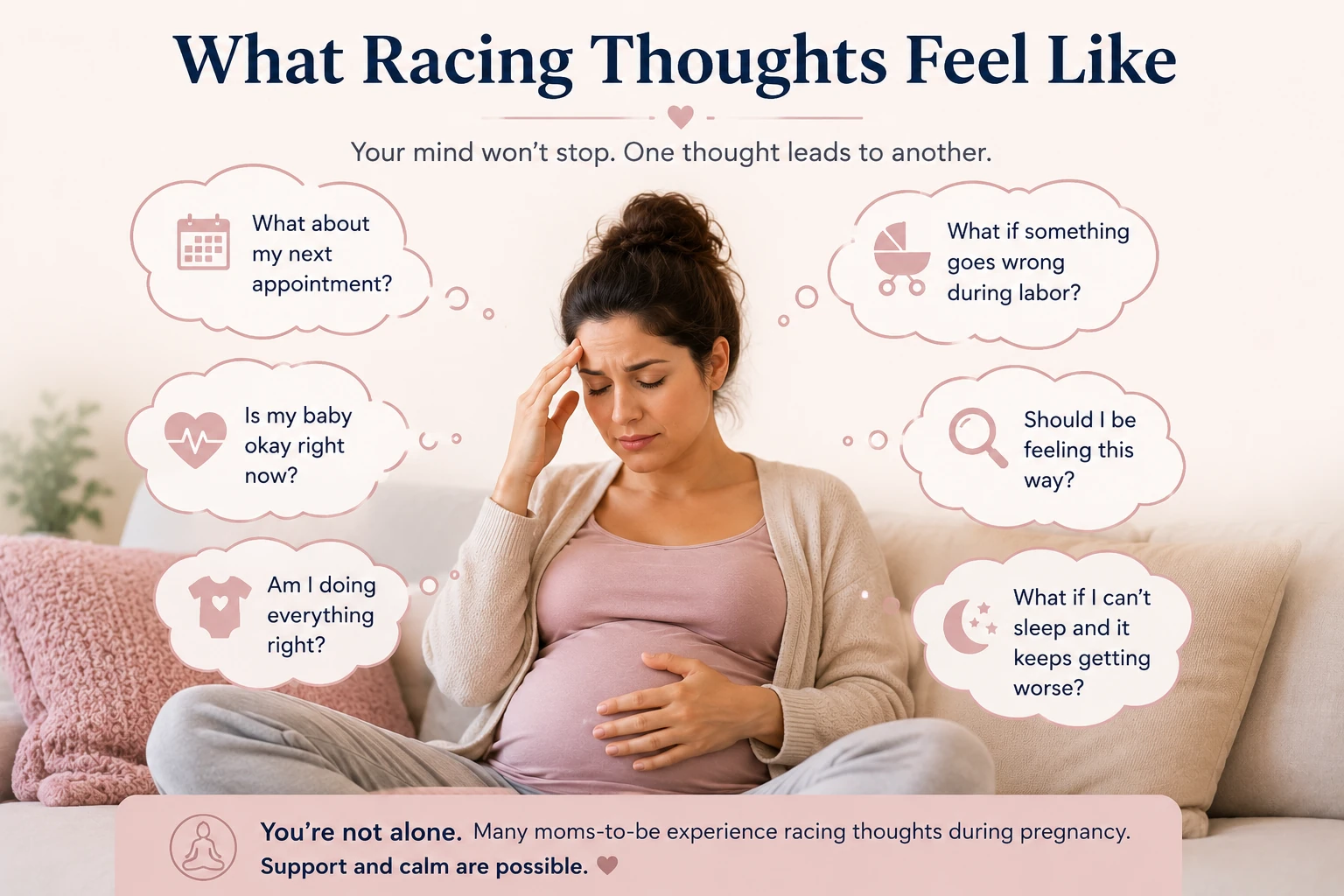
Racing thoughts are rapid, repetitive streams of worries, questions, or "what if" scenarios that feel difficult to stop.
They often sound like:
• "What if something happens to my baby?"
• "Should I be feeling more movement?"
• "Did I eat something I shouldn't have?"
• "What if labor doesn't go as planned?"
• "What if I forget something important?"
Instead of thinking about one concern, your mind quickly jumps from one worry to another.
For many moms, these thoughts become most noticeable during quiet moments, especially at bedtime.
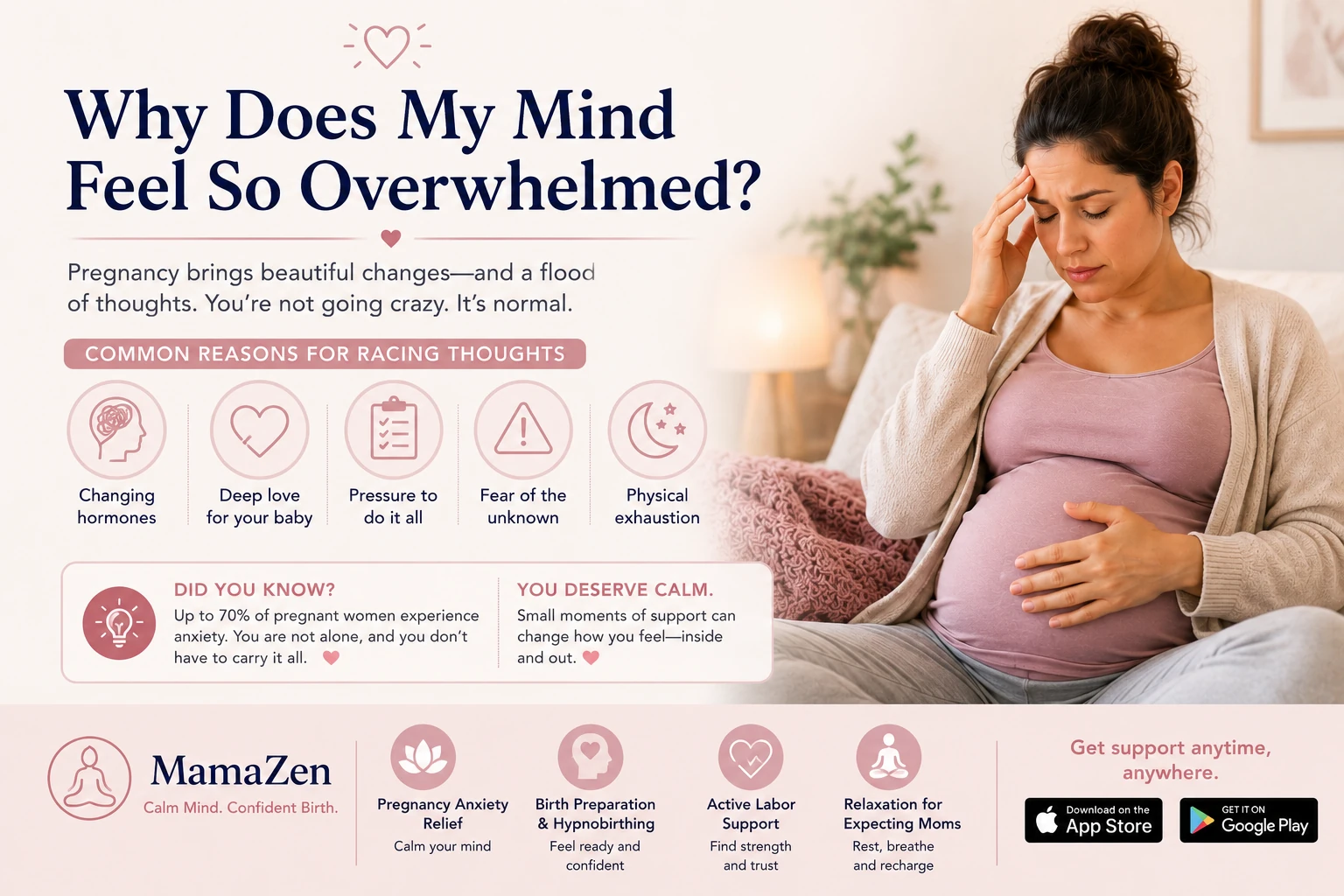
Pregnancy changes nearly every part of your life, including how your brain responds to uncertainty.
Racing thoughts can look a little different depending on where you are in your pregnancy.
First trimester
Many moms worry about miscarriage, early pregnancy symptoms, or whether everything is developing normally. Waiting for early ultrasounds or test results can make uncertainty feel especially difficult.
Second trimester
As your pregnancy becomes more visible, your thoughts may shift toward preparing for your baby's arrival. You may find yourself thinking about work, finances, childcare, or whether you're making all the "right" decisions.
Third trimester
As labor approaches, it's common for racing thoughts to focus on birth, pain management, hospital plans, or what life will be like once your baby arrives. Many moms also notice their thoughts become more active at night as sleep becomes more uncomfortable.
Every pregnancy is different, and your worries may change over time. That doesn't mean you're doing anything wrong—it simply reflects the many transitions that pregnancy brings.
One of the biggest reasons for racing thoughts is that your brain is working overtime to keep your baby safe.
It becomes more alert to possible dangers, even when no real danger exists.
This protective instinct is completely normal, but it can also leave you feeling mentally exhausted.
Pregnancy hormones influence mood, sleep, and emotional processing.
Combined with physical changes and anticipation, they can make worries feel more intense than usual.
Unlike many situations in life, pregnancy comes with months of uncertainty.
You may wonder:
• Is my baby growing normally?
• What will labor be like?
• Will everything go according to plan?
• Will I know what to do when my baby arrives?
Because there aren't immediate answers, your mind naturally keeps searching.
Pregnancy isn't just physical.
You're thinking about:
• Doctor appointments
• Birth plans
• Baby names
• Work leave
• Finances
• Feeding choices
• Childcare
• Preparing your home
• Becoming a parent
That's a lot for one brain to carry.
Many women notice that their anxiety seems to increase after they get into bed.
That's because daytime distractions disappear.
Without work, conversations, or daily tasks competing for your attention, your brain finally has space to replay every concern.
Fatigue can also make it harder to manage anxious thoughts, creating a cycle where worrying makes it difficult to sleep, and lack of sleep makes worrying even worse.
Racing thoughts and poor sleep often create a cycle.
The more you worry, the harder it becomes to fall asleep.
Then, after a restless night, your brain has fewer mental resources to manage stress the next day, making anxious thoughts feel even louder.
Breaking this cycle doesn't require perfect sleep. Even small bedtime habits—such as putting your phone away, practicing slow breathing, or listening to a calming guided meditation—can help signal to your nervous system that it's safe to rest.
Occasional worry is completely normal.
However, racing thoughts may be part of pregnancy anxiety if they:
• Happen almost every day
• Keep you awake at night
• Make it difficult to concentrate
• Lead to constant Googling
• Cause frequent reassurance seeking
• Prevent you from enjoying your pregnancy
• Leave you feeling overwhelmed most of the time
If this sounds familiar, know that you're not alone and support is available.
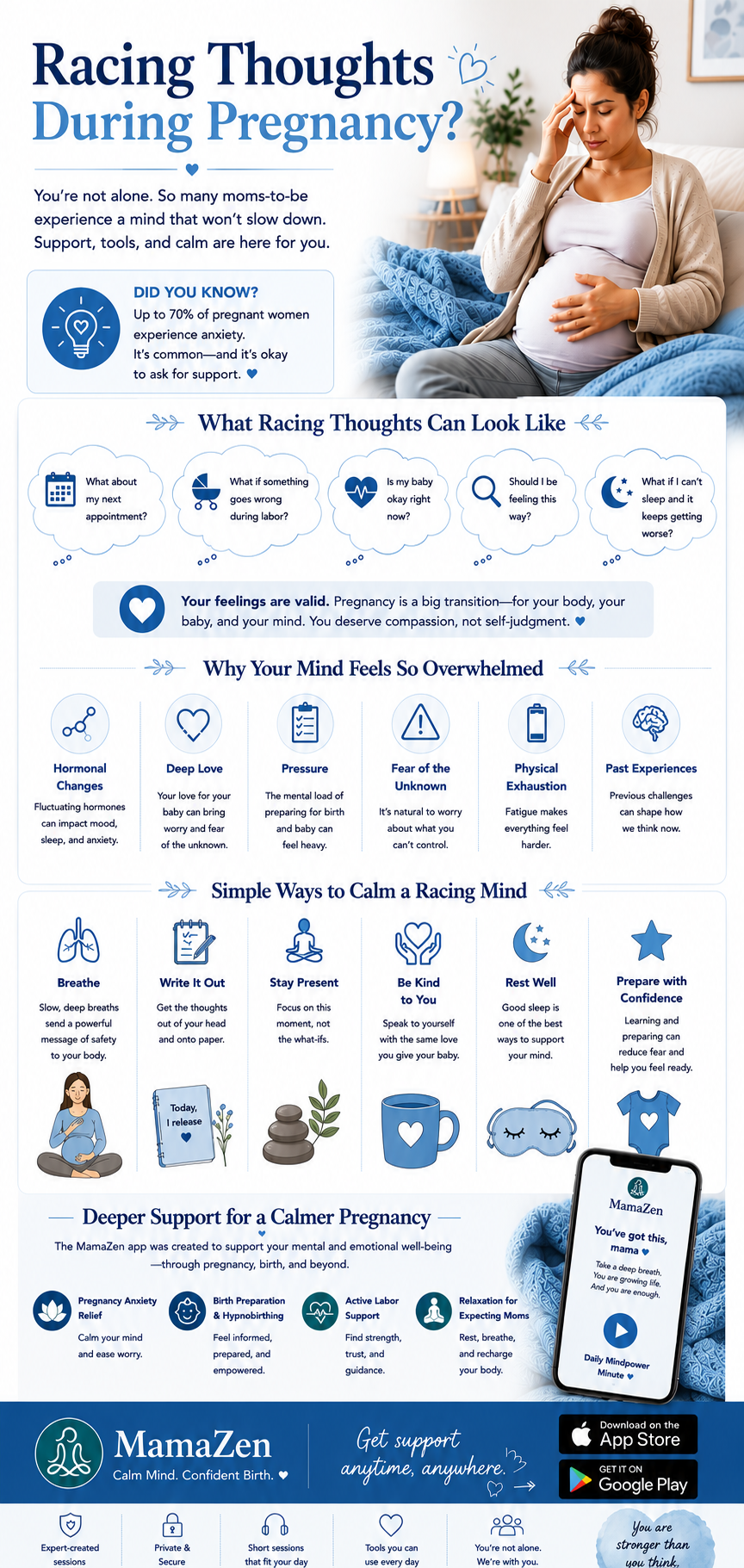
Although they're often confused, racing thoughts and intrusive thoughts are not exactly the same.
Racing thoughts usually involve many worries that move quickly from one topic to another.
Intrusive thoughts are unwanted thoughts or mental images that can feel shocking or upsetting. Many expecting mothers experience occasional intrusive thoughts, and having them does not mean you want them to happen.
If intrusive thoughts become frequent, highly distressing, or interfere with your daily life, talk with your healthcare provider. Effective support is available.
Racing thoughts don't always stay in your mind. Many moms also notice physical symptoms such as:
These symptoms can have many possible causes during pregnancy, including anxiety, normal pregnancy changes, or other medical conditions. If symptoms are severe, persistent, or concerning, contact your healthcare provider.
When your mind starts jumping into the future, gently bring yourself back to the present.
Ask yourself:
"What do I know is true right now?"
Often, you'll realize you're safe, your baby is being cared for, and you're doing everything you reasonably can.
Searching for answers may feel reassuring for a moment, but it often leads to more questions and more anxiety.
Instead, rely on trusted information from your healthcare provider.
When you're anxious, it's natural to look for reassurance. You might search online, check pregnancy apps repeatedly, or ask loved ones if everything sounds normal.
While reassurance can feel comforting for a short time, the relief often fades quickly because your mind simply finds a new "what if."
Learning to tolerate uncertainty, rather than trying to eliminate every doubt, can help reduce the cycle over time.
Sometimes your brain keeps repeating worries because it's afraid you'll forget them.
Writing them down can help your mind let go instead of replaying them over and over.
Mindfulness doesn't require you to stop thinking.
Instead, it teaches you to notice thoughts without immediately reacting to them.
For example, when you notice yourself thinking, "What if something goes wrong?" you might simply acknowledge, "I'm having a worried thought," and gently return your attention to your breathing or the present moment.
Over time, this can make racing thoughts feel less overwhelming.
When your body feels calmer, your mind usually follows.
Gentle relaxation exercises, breathing techniques, mindfulness, and pregnancy specific guided audio sessions can help reduce the intensity of racing thoughts and make it easier to rest.
If someone you love is experiencing racing thoughts during pregnancy, one of the most helpful things you can do is listen without immediately trying to solve the problem.
You can also help by:
Sometimes simply feeling heard can make a meaningful difference.
Racing thoughts don't mean you're failing.
They don't mean you're weak.
And they certainly don't mean something is wrong with your pregnancy.
More often, they reflect how deeply you already care about your baby.
You don't need to eliminate every anxious thought.
You simply need to learn that you don't have to follow every thought your mind creates.
With practice, support, and self compassion, your mind can become a calmer place, even during one of life's biggest transitions.
If pregnancy racing thoughts are making it difficult to enjoy your pregnancy, MamaZen offers guided support for pregnancy anxiety, mindfulness, better sleep, emotional wellness, hypnobirthing, and birth preparation to help you feel calmer and more connected throughout your journey.

Racing thoughts by themselves are usually not an emergency. However, contact your healthcare provider promptly if you experience:
If you believe you're experiencing a medical emergency, seek immediate medical care.
Many moms worry that racing thoughts mean they're doing pregnancy "wrong."
In reality, worrying often reflects how important this new role already feels to you.
You don't need to have a perfectly quiet mind to be a loving mother. Giving yourself permission to notice anxious thoughts without judging yourself can be an important step toward feeling calmer.
Yes. Many expecting mothers experience racing thoughts because pregnancy brings significant physical, emotional, and life changes. Occasional worry is normal, but persistent anxiety that interferes with daily life may benefit from additional support.
At night, your brain has fewer distractions. Fatigue, physical discomfort, and quiet surroundings can make anxious thoughts feel louder and more difficult to ignore.
Hormonal changes can affect mood, sleep, and emotional regulation. Combined with uncertainty and the natural instinct to protect your baby, they may contribute to racing thoughts during pregnancy.
You may find it helpful to practice mindfulness, limit excessive Googling, write your worries down, use breathing exercises, and focus on what you know is true today. If racing thoughts become overwhelming, speak with your healthcare provider.
If racing thoughts keep you awake, interfere with daily life, trigger panic, or make it difficult to enjoy your pregnancy, talk with your healthcare provider. Pregnancy anxiety is common, and effective support is available.
Irin Rubin is the CEO and co-founder of MamaZen and the author of The MamaZen Method. Inspired by her own experience with pregnancy and postpartum anxiety, she has spent years developing mindfulness and cognitive hypnotherapy programs that support emotional well-being during pregnancy, birth, postpartum, and parenting.


Science-based Mindpower Sessions® help you create lasting change for you and your family.

Get instant relief right when you need it with our 5-7 Minute Emergency Sessions.

Empowering Kids to conquer anxiety, build confidence, and foster positive self-talk.

Supporting and guiding you through every step of parenthood.
Get expert tips to raise confident kids.
Enter email for access!